Views: 0 Author: Site Editor Publish Time: 2026-05-15 Origin: Site
Shrinking margins and rising material costs demand peak efficiency in modern manufacturing environments. Upgrading your rewinding equipment helps combat these daily pressures directly. Manual processes simply cannot keep pace. Operators struggle, lines slow down, and waste accumulates. Aluminum foil proves incredibly unforgiving on the production floor. Micro-tears, severe wrinkling, and improper web handling quickly ruin entire production rolls. Selecting precision equipment is absolutely critical to avoid massive scrap rates.
We provide a structured evaluation framework for procurement managers. We also guide factory engineers through the technical selection process. You will learn how to accurately assess exact machine capabilities. We explore critical automation features, implementation risks, and long-term asset viability. This guidance ensures you make a highly confident capital expenditure decision. By understanding tension dynamics and modern automation tiers, you protect your investment entirely. Let us examine the vital mechanical features you must evaluate.
Tension is everything: Closed-loop foil roll tension control is non-negotiable for preventing web breaks and wrinkling in thin-gauge materials.
Throughput dictates configuration: High-volume operations require a multi-spindle foil rewinder to minimize changeover downtime, while bespoke runs may suit single-spindle models.
Automation reduces labor dependency: Features like auto-splicing, core loading, and tail gluing are standard in a modern automatic foil roll machine, directly impacting Overall Equipment Effectiveness (OEE).
TCO goes beyond the sticker price: Vendor shortlisting must weigh local parts availability, compliance (CE/OSHA), and proven scrap-reduction guarantees.
Current legacy machines often bottleneck your entire production floor. Manual changeovers force operators to stop the line repeatedly. This constant downtime destroys daily yield targets. High defect rates further compound the profitability problem. Wrinkles, edge cracks, and telescope winding ruin perfectly good foil. We frame this business problem around pure efficiency loss. Outdated mechanical brakes and manual core loading simply cannot sustain modern output requirements.
Outcome-driven success criteria guide your upcoming purchase. You must define clear, measurable targets before evaluating vendors.
Reduction in material scrap rate: Target less than 2% total scrap. Modern sensors make this goal highly achievable.
Increase in line speed: Faster speeds must never compromise your slit edge quality. The output must remain absolutely flawless.
Reduced operator intervention: Fewer manual touches mean higher safety. Operators simply monitor the automated sequences per shift.
Material specifics dictate your ultimate machine build. You must accommodate your exact gauge range perfectly. Household foil often measures between 9 and 11 microns. This thin material tears instantly under minor stress. Heavy-duty catering foil behaves entirely differently. It requires stronger shear forces to cut cleanly. Pharmaceutical blister foils add yet another layer of complexity. Your chosen machine must handle these distinct physical profiles without requiring extensive mechanical retrofits.
Aluminum foil completely lacks elasticity. This fundamental physical challenge complicates the rewinding process endlessly. Sudden tension spikes cause immediate web breaks. Low tension causes the finished roll to telescope sideways. You must demand perfect foil roll tension control across the entire production run.
Evaluating tension systems requires deep mechanical scrutiny. You require closed-loop architectures. These setups utilize highly sensitive load cells. They monitor web tension continuously in real time. They feed data back to pneumatic or magnetic powder brakes. The brakes adjust instantly to correct any detected deviations. Magnetic powder brakes provide exceptionally smooth torque control. This smoothness prevents sudden jerks during acceleration.
You must assess taper tension capabilities thoroughly. Taper tension prevents internal roll crushing. As the rewind diameter increases, the roll weight grows. The control system automatically reduces web tension accordingly. This preserves the internal core structure perfectly.
Look closely at web guiding technology. Ultrasonic sensors read material edges accurately. Advanced photoelectric edge-guiding sensors offer another excellent option. They ensure perfect coil alignment just prior to slitting. Precision alignment keeps trimmed waste to an absolute minimum.
Best Practice: Always calibrate load cells monthly to ensure data accuracy.
Common Mistake: Relying on open-loop tension systems for thin-gauge foil guarantees high scrap rates.
Proper foil roll slitting requires incredibly robust mechanisms. You must compare rotary shear blades against razor-in-air setups. Rotary shears provide the cleanest edges for delicate foil. They eliminate microscopic burrs effectively. However, they require complex maintenance procedures and strict calibration. Razor-in-air setups cost less but generate microscopic aluminum dust. Evaluate the presence of automatic knife positioning systems. They allow rapid recipe changes. Operators push a single button, and knives reposition themselves precisely.
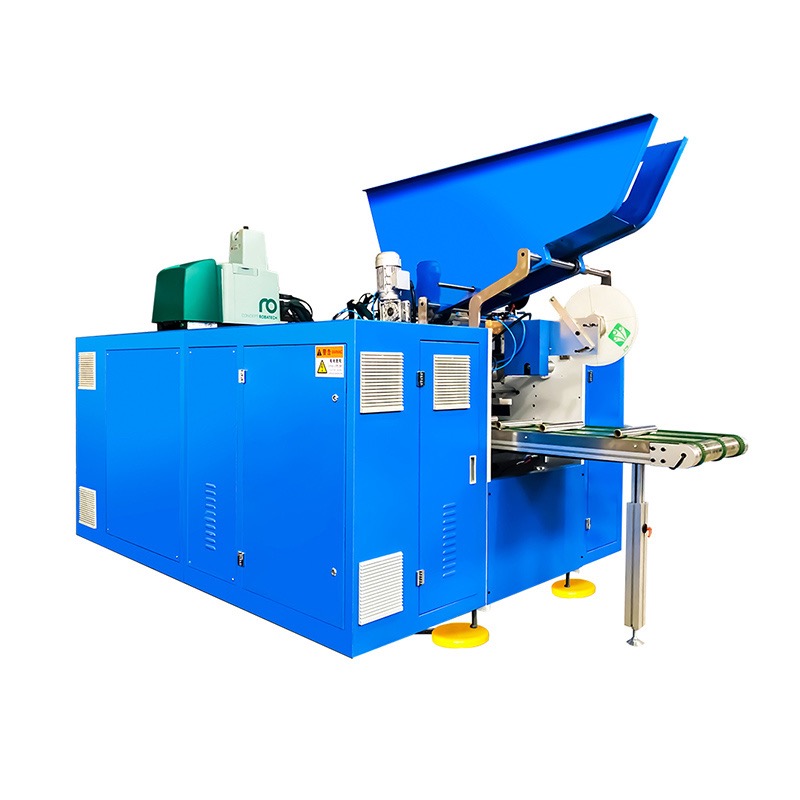
Transitioning to an automatic foil roll machine changes your floor dynamics entirely. Assess features removing your operators from hazardous zones. Look for automatic core feeding mechanisms. Auto-gluing or taping of the tail is essential. Automated roll discharge moves finished products onto conveyors safely.
Verify the reliability of the auto-splicing mechanism. It must perform flawlessly at high operational speeds. A weak splice causes disastrous downstream packaging jams.
Slitting Mechanism | Edge Quality | Maintenance Complexity | Best Application |
|---|---|---|---|
Rotary Shear Blades | Excellent, burr-free | High (requires precise calibration) | High-speed, premium foil products |
Razor-in-Air | Good, but produces minor dust | Low (simple blade swaps) | Slower runs, thicker catering gauges |
Crush Cut | Fair, can warp thin foil | Medium | Not recommended for thin foil |
Configuration choices directly impact your daily throughput. Single-spindle machines fit specific operational profiles. They are best for lower capital budgets. Highly specialized short runs benefit from them greatly. Thicker gauge materials requiring slower speeds also suit single spindles well. The main drawback involves constant operational downtime. The machine must stop completely for every single roll changeover. This kills your production momentum.
Conversely, high-volume operations demand a multi-spindle foil rewinder. Turret rewinders handle continuous production flawlessly. They dominate large consumer packaging floors.
The core advantage lies in automated indexing. The turret indexes to a new core without halting the unwind sequence. It utilizes a flying splice to sever and attach the web. This action drastically improves your Overall Equipment Effectiveness. It eliminates the 30-to-60-second delay found in manual changes.
The primary risk involves mechanical complexity. More moving parts require rigorous preventative maintenance. You must train your technicians thoroughly on turret alignment.
Safety and compliance protect your workforce completely. Ensure the equipment meets all regional safety standards. CE marking remains mandatory for European deployments. OSHA compliance is an absolute requirement for facilities in the US.
You must insist on mandatory safety features. Install optical light curtains around the primary slitting zone. They stop the machine instantly if broken. Emergency stops must remain easily accessible everywhere. Interlocked guarding prevents access to any moving parts during active cycles.
Consider facility integration realities closely. Floor loading presents a massive environmental factor. High-speed rewinders vibrate heavily during operation. They require solid concrete foundations to maintain precision. Poor vibration isolation leads to severe winding defects. The structural resonance ruins your edge alignment.
Data integration capabilities matter greatly for modern production. Check the machine’s PLC architecture. Does it integrate easily with existing factory MES or SCADA systems? Look for OPC-UA protocols. Real-time yield tracking helps you monitor line performance. You spot inefficiencies before they ruin a whole shift.
Look far beyond the initial purchase price. Compare the operational value over a 5-to-10-year period. You need a reliable aluminum foil roll rewinding machine that performs consistently.
Use a strict vendor evaluation checklist during your procurement phase.
First, evaluate Service Level Agreements carefully. Determine the exact average response time for technical support. Every minute of downtime costs you money. Ensure the vendor offers 24/7 remote diagnostics. Remote troubleshooting solves minor software faults instantly.
Second, scrutinize replacement parts availability. Avoid heavy reliance on proprietary, overseas-only circuit boards. Prefer commercially off-the-shelf electronic components. Brands like Siemens, Allen-Bradley, or Omron offer global availability. This prevents month-long waits for simple replacement drives.
Finally, mandate a rigorous Factory Acceptance Testing phase. Insist on running your specific foil gauges during this test. Measure web break frequency, edge straightness, and final roll density. Never authorize shipment until the machine meets speed and scrap guarantees. This proves the machine performs under actual conditions.
Sourcing the right rewinder requires a careful balancing act. You must weigh advanced automation features against pure mechanical precision. Delicate materials demand absolute perfection. Upgrading your equipment eliminates crippling bottlenecks and protects your margins.
Take these immediate next steps:
Document your current baseline metrics, including OEE, scrap rates, and exact changeover times.
Build a standardized Request for Proposal prioritizing closed-loop tension systems.
Demand strong aftermarket support and rapid parts availability from all shortlisted vendors.
Schedule site visits to see identical machines running in live production environments.
A: Speeds typically range from 150 m/min to over 600 m/min. This depends entirely on gauge thickness and automation level. You should evaluate based on sustainable speed without web breaks. Do not just look at the maximum rated speed on the brochure.
A: Some advanced models offer interchangeable shafts. However, dedicated machines are historically much more reliable. If a vendor claims dual-functionality, strictly verify the actual changeover times during a live demonstration.
A: It utilizes advanced flying splice technology. It also uses precise tension isolation between zones. This allows the web to be cut and attached to the new core at full operational speeds. The foil never tears during this seamless transition.