Views: 0 Author: Site Editor Publish Time: 2026-07-06 Origin: Site
Many factories do not lose money only during production. They lose it during poor rewinding, rough cutting, loose rolls, and unstable packing. A Rewinding Machine solves these problems by turning large rolls into clean, usable finished rolls. In this article, we will explain what it does, where it is used, and how it supports better roll production.
A Rewinding Machine is mainly used to convert a large parent roll into smaller finished rolls. The parent roll may be aluminum foil, plastic film, cling film, baking paper, or another flexible roll material. The machine unwinds the large roll, controls material tension, cuts or slits it when needed, and rewinds it onto smaller cores.
This process sounds simple, but it directly affects product quality. If the roll is too loose, it may collapse during packing. If it is too tight, thin material may deform. If the cut edge is poor, the finished roll may look cheap or fail during use. For this reason, rewinding is not only a size-changing process. It is also a quality-control step.
In aluminum foil production, the machine is often used to make household foil rolls, catering foil rolls, kitchen foil rolls, and food packaging rolls. In film production, it can help prepare cling film or plastic wrap rolls. In baking paper production, it rewinds paper into roll formats used in kitchens, bakeries, and retail packaging.
The key purpose is to make roll materials easier to sell, pack, ship, and use. A jumbo roll is efficient for raw material supply. A finished roll is practical for end users. The rewinding process connects these two stages.
Tip:Before choosing a machine, define the finished roll width, length, diameter, and core size first.
A rewinding line usually starts from an unwinding station. The large parent roll is loaded onto the machine. The material then feeds through rollers, tension-control units, cutting parts, and rewinding shafts. During the process, the machine keeps the web stable so it does not wrinkle, stretch, or tear.
Tension control is one of the most important parts. Thin aluminum foil and delicate films need stable tension from the inner layers to the outer layers. If tension changes too much, the roll may become loose in one area and tight in another. This can cause uneven edges, roll deformation, or material waste.
Some machines also include slitting and cutting functions. A rewinding and cutting machine can divide a wider material into narrower rolls. It can also cut the roll at a set length. This is useful when factories need different roll formats for retail, food service, or industrial customers.
After the material reaches the target length or diameter, the machine cuts it and completes the finished roll. In more automated systems, the machine may also load new cores, discharge finished rolls, and prepare the next rewinding cycle with less manual work.
Note:Poor tension control often causes wrinkles, telescoping rolls, edge waste, and unstable downstream packing.
Rewinding machines are widely used for roll-based flexible materials. The most common material is aluminum foil. An aluminum foil rewinding machine can process foil into small rolls used for cooking, baking, food storage, takeout packaging, and catering supply. Foil is thin and easy to damage, so clean rewinding matters.
Plastic film is another common material. A plastic film rewinding machine can handle cling film or food wrap for kitchen and food packaging use. Film materials may stretch more than foil, so tension setting and winding pressure must match the material behavior.
Baking paper is also processed by this type of equipment. A baking paper rewinding machine prepares paper rolls used in bakeries, food preparation, and household baking. Paper may not stretch like film, but it still needs clean edges and stable winding.
Some machines are designed for broader flexible packaging uses. The right choice depends on material thickness, roll width, roll weight, desired speed, core diameter, and cutting method. One machine may not fit every material. Buyers should match the machine to the real production task, not only to the product name.
Rewinding quality affects both production efficiency and customer experience. A neat roll looks more professional. It also runs better during cartoning, labeling, shrink wrapping, and final packing. When each roll has the same width, length, diameter, and tightness, the next process becomes easier to control.
Poor rewinding creates many hidden costs. Wrinkled foil may be rejected. Uneven film rolls may not fit the package. Loose rolls may shift during transport. Bad edge cutting may cause tearing when the user pulls the material. These problems may seem small, but they can increase waste and complaints.
Good rewinding also reduces manual correction. Operators spend less time fixing roll defects, replacing damaged material, or clearing web breaks. For factories running many roll sizes, stable machine settings help reduce downtime during changeovers.
For food packaging materials, cleaner roll handling is also valuable. Automation can reduce unnecessary touching and help protect the roll surface. This is especially useful for aluminum foil, cling film, and baking paper products used around food.
Tip:Check finished rolls after packing, not only after rewinding. Packing can reveal hidden roll-size problems.
A semi-automatic rewinding machine is often used when production volume is moderate or when a factory needs flexible operation. It usually needs more operator involvement, but it can be easier to manage for smaller batches, custom roll sizes, or lower investment projects.
A fully automatic aluminum foil rewinder is better for higher output. It can support automatic feeding, cutting, core exchange, and finished roll discharge, depending on the machine design. This reduces labor pressure and helps keep production more stable over long runs.
A multi-spindle rewinding machine is designed for faster and more continuous production. Multiple shafts help reduce waiting time during roll changeover. This is useful when the factory needs higher productivity and consistent roll quality.
Some systems combine rewinding with other packaging equipment. For example, a complete line may include rewinding, labeling, cartoning, saw blade fixing, and heat shrink packaging. This type of setup can help factories move from raw material conversion to finished packaged goods in a smoother workflow.
Machine Type | Typical Use | Best Fit |
Semi-automatic rewinder | Flexible small-batch rewinding | Lower to medium output |
Fully automatic rewinder | Faster roll production | High-volume roll converting |
Multi-spindle rewinder | Reduced changeover time | Continuous production needs |
Rewinding and cutting machine | Rewinding plus width or length control | Multiple roll sizes |
Integrated packing line | Rewinding to final packaging | Factories needing full workflow |
A Rewinding Machine is widely used in food packaging production. Aluminum foil rolls, cling film rolls, and baking paper rolls are common examples. These products need clean winding because they are handled often and must pull smoothly during use.
It is also used in household roll production. Supermarket foil rolls, kitchen wrap rolls, baking paper rolls, and private-label packaging products all need consistent roll size and neat appearance. Buyers may compare rolls by touch, look, and ease of use, so winding quality affects product value.
Catering and food service suppliers also need rewound products. Large kitchens, restaurants, hotels, bakeries, and takeout suppliers often use foil or film rolls in larger formats. These rolls must be strong, clean, and easy to dispense during daily operation.
Industrial packaging can also use rewinding equipment. Some factories need roll materials for wrapping, insulation, surface protection, or packaging support. In these cases, accuracy and repeatability matter because the rolls may feed into another machine or production process.
The first step is to check the material. Aluminum foil, plastic film, cling film, and baking paper behave differently during rewinding. Foil can wrinkle or tear. Film can stretch. Paper can curl or crease. The machine must support the material’s thickness, strength, and surface behavior.
Next, check the parent roll and finished roll size. Important details include maximum parent roll width, parent roll diameter, core size, finished roll width, finished roll length, and finished roll diameter. These points decide whether the machine can handle the real production job.
Production speed is also important. A high-speed rewinding machine may increase output, but speed only helps when quality stays stable. A slower but more stable line may work better for some materials or smaller factories. The best option depends on output goals, labor cost, and order structure.
Automation level should match daily production needs. A semi-automatic machine may work well for small batches. A fully automatic roll rewinder may be more suitable when the factory needs steady output, lower manual handling, and better repeatability.
Future line integration also matters. If the factory plans to add cartoning, labeling, heat shrink packaging, or other packing machines later, the rewinder should fit that workflow. Choosing equipment only for today may create bottlenecks later.
Note:A cheaper machine may cost more if it creates waste, downtime, or inconsistent rolls.
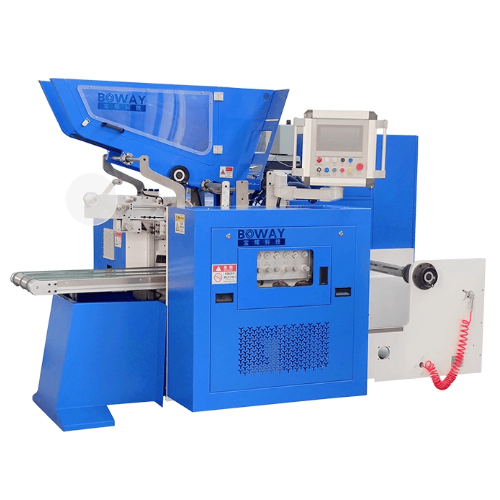
BOWAY provides Rewinding Machine solutions for aluminum foil, plastic film, baking paper, and flexible roll production. Its product range includes aluminum foil rewinding machines, plastic film rewinding machines, baking paper rewinding machines, high-capacity foil rewinders, fully automatic aluminum foil roll rewinders, multi-spindle rewinding machines, and rewinding-and-cutting equipment. These machines support stable tension, accurate cutting, neat roll forming, and smoother roll conversion.
BOWAY also supplies related equipment for a wider packaging workflow. Its product categories include foil container production lines, cartoning machines, aluminum foil saw blade machines, and heat shrink packaging machines. This helps factories plan more complete production lines from rewinding to final packing.
BOWAY have customized software and mold development, technical consulting, industrial control components, hardware manufacturing, installation, commissioning, maintenance, and tailored equipment solutions. I did not find a dedicated OEM/ODM page on the official website. For related service information, please visit the official Support/Solution page and Contact page.
BOWAY helps factories turn jumbo rolls into neat, stable, ready-to-pack rolls. Its Rewinding Machine range supports foil, film, and baking paper production with accurate cutting, steady tension, and flexible automation. With related packing equipment and service support, BOWAY adds value across the full roll converting workflow.
A: A Rewinding Machine converts large rolls into smaller, cleaner finished rolls.
A: A Rewinding Machine rewinds, cuts, and controls roll size.
A: It prevents wrinkles, loose rolls, tearing, and uneven edges.
A: Yes. It is widely used for aluminum foil roll production.
A: Price depends on speed, automation, size, and functions.
A: A Rewinding Machine rewinds; a slitter rewinder also cuts widths.