Views: 0 Author: Site Editor Publish Time: 2026-10-31 Origin: Site
Industrial equipment procurement carries incredibly high stakes for any manufacturing facility. Selecting the wrong cutting equipment leads directly to production bottlenecks. You will face excessive consumable costs. Compromised material yields quickly drain operational profitability. An inadequate cutting solution disrupts entire downstream processes.
Modern facility managers must bridge the gap between technical specifications and tangible business outcomes. A successful purchase requires balancing upfront capital expenditure against long-term operational reliability. You cannot afford unexpected downtime when production schedules remain tight. Managers need practical strategies to avoid costly purchasing mistakes.
This guide provides an evidence-based framework for evaluating, shortlisting, and implementing the right industrial Saw Blade Machine. We focus heavily on application requirements and facility constraints. You will learn how to analyze core machine categories. We will also explore vital evaluation metrics to ensure optimal cutting performance.
Purchasing industrial cutting equipment demands rigorous alignment between machine specifications and actual factory needs. You must define clear success criteria early. Shift your focus away from finding the generic "best machine" on the market. Instead, prioritize the best fit for your specific application. Assess your daily throughput expectations realistically. Consider your daily shift cycles. Determine acceptable tolerance levels for your finished parts. Tight tolerances require highly rigid equipment configurations.
Next, you must categorize your primary and secondary materials. We call this building a material matrix. A machine excelling at cutting solid steel billets might struggle processing delicate aluminum extrusions. Industrial timber requires vastly different feed rates compared to mixed pallets. Document every material your facility processes. Note the material grades, wall thicknesses, and structural profiles.
Facility constraints often dictate your final equipment choice. You must audit your existing infrastructure carefully. Check your available three-phase power supply capacity. Measure available floor space accurately. Do not forget to account for in-feed and out-feed zones. Assess your ambient working conditions. Extreme temperature variations or high dust environments impact sensitive electronic controls.
| Material Category | Typical Application | Key Machine Requirement | Common Challenges |
|---|---|---|---|
| Ferrous Metals | Solid steel billets, heavy pipes | High torque, rigid gearboxes | Excessive heat generation |
| Non-Ferrous Metals | Aluminum extrusions, brass profiles | High RPM, variable speed control | Material galling on teeth |
| Industrial Timber | Lumber sizing, mixed pallets | Fast carriage speeds, dust extraction | Resin buildup on blades |
| Dense Composites | Fiberglass, synthetic panels | Scoring blade integration | Abrasive edge wear |
Understanding equipment categories simplifies the procurement process. Each machine type serves distinct industrial purposes. Choosing the correct architecture ensures long-term operational success.
Band saws dominate heavy-duty metal cutting operations. They handle large structural shapes effortlessly. Many facilities rely on them for batch bundling. Horizontal configurations excel at cutting thick steel bars. Vertical configurations offer better maneuverability for intricate contour cuts. The primary decision driver involves blade width capacity. Wider blades resist deflection during heavy cuts. You must also evaluate consistent down-feed pressure mechanisms. Hydraulic down-feed systems provide superior control compared to gravity-fed alternatives.
Cold saws produce high-precision, burr-free cuts. They perform exceptionally well on tubes, pipes, and complex profiles. They operate at lower speeds. This prevents the material from overheating. The rigidity of the gearbox acts as the primary decision driver. A sturdy gearbox minimizes harmful vibrations. Variable RPM control remains crucial for processing different alloys. Aluminum requires higher speeds, while stainless steel demands slower, deliberate rotations. Integrating a high-quality Saw Blade Machine elevates your precision cutting department immediately.
Panel saws handle high-volume sizing tasks efficiently. Facilities use them extensively for wood, composites, and rigid plastics. Carriage stability dictates the final cut quality. A vibrating carriage ruins expensive composite sheets. Scoring blade integration prevents material tear-out on delicate laminates. Dust extraction efficiency requires careful evaluation. Poor extraction systems create hazardous environments and ruin internal machine components.
Grinders represent a critical support investment. They enable in-house resharpening of TCT (Tungsten Carbide Tipped) blades. Facilities also use them for HSS (High-Speed Steel) blades. In-house grinding reduces your reliance on external consumable suppliers. Look for robust automation capabilities. Automated grinders ensure precise tooth geometry. They run continuously without requiring dedicated operator oversight.
Evaluating technical specifications requires a methodical approach. Focus on structural and electrical components directly impacting performance.
Proper motor architecture dictates long-term reliability. A direct-drive Saw Blade Machine eliminates the maintenance headaches associated with aging belts. Always verify continuous horsepower ratings during your factory acceptance tests.
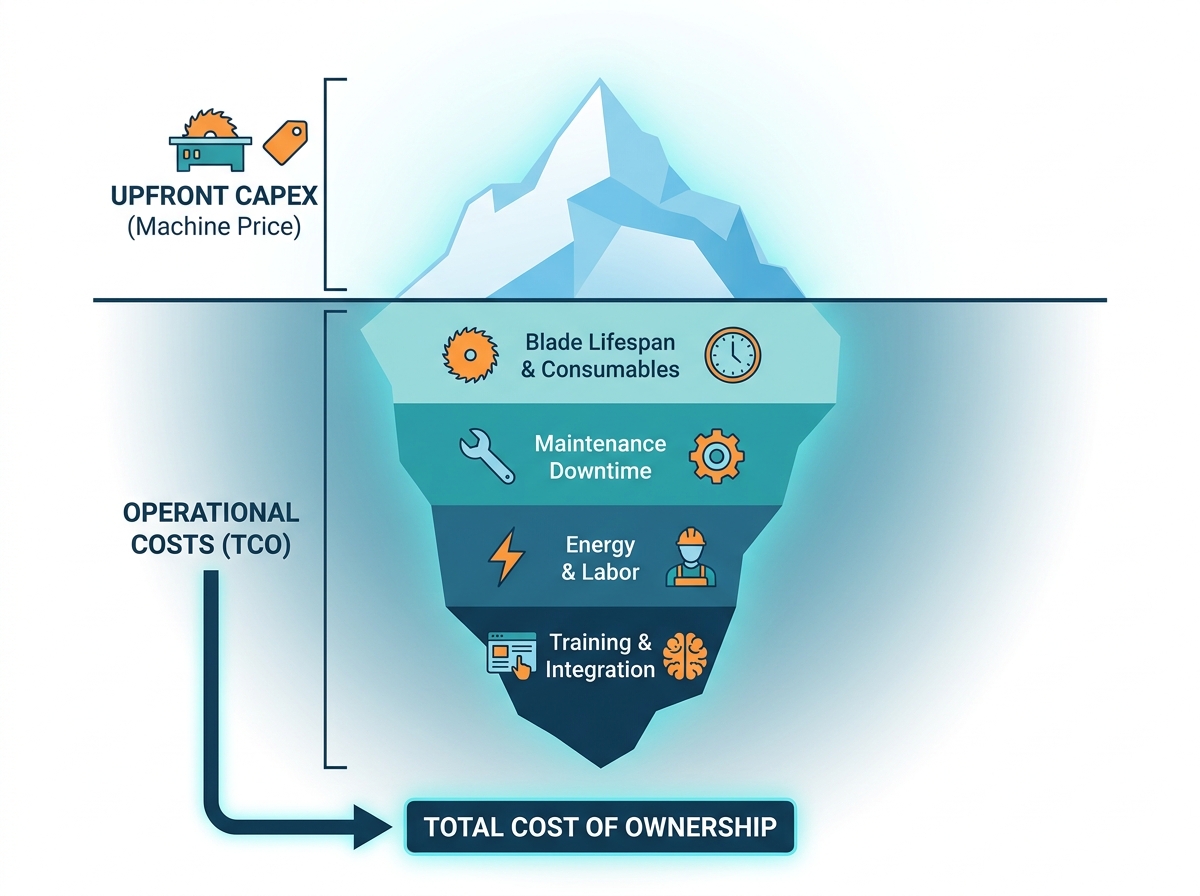
Equipment implementation involves managing ongoing operational expenses. Smart buyers analyze these factors long before signing purchase orders.
Consumable burn rate impacts your operating budget heavily. Model the expected blade life based on vibration dampening. Machines utilizing heavier cast-iron bases typically yield longer blade life. The extra mass absorbs destructive harmonic frequencies. Lighter steel-framed machines often struggle to dampen vibrations adequately. This causes premature tooth wear.
You must weigh the risks of new versus used equipment. Used machinery offers a tempting upfront discount. However, you must evaluate the hidden risks. Obsolete proprietary electronics create major repair hurdles. Hidden trunnion wear ruins cut accuracy. A lack of manufacturer warranty leaves you vulnerable. Sourcing obsolete replacement parts often takes weeks.
Maintenance downtime directly affects factory throughput. Review the physical accessibility of routine maintenance points. Fast blade changeover speeds increase daily productivity. Ensure operators can clear chip extraction ports easily. Gearbox oil checks should take seconds, not hours. Complicated maintenance routines get ignored by busy operators.
Account for the operator learning curve. Highly complex HMI (Human-Machine Interface) screens may require extensive training. Confusing interfaces increase the risk of operator errors during rollout. Operators prefer intuitive, visually guided touchscreens. Simplify your rollout by demanding comprehensive onsite training from the manufacturer.
Moving from evaluation to final selection requires a structured shortlisting process. Base your final decision on verifiable data.
Filter vendors carefully during the shortlisting phase. Demand test cuts using your specific material samples. Reputable vendors welcome this opportunity. Reject suppliers refusing to demonstrate their equipment capabilities on your materials. Visual inspection of these test cuts reveals true machine rigidity.
Assess supplier viability beyond the initial sale. Request historical data regarding their average response times for service calls. You need immediate help when machines go down. Investigate their current supply chain stability. Verify they hold critical replacement parts in local inventory. Waiting for international shipping ruins production schedules.
Build a weighted decision matrix to finalize your choice. Score each shortlisted machine across key performance categories. Weight these categories based on your facility priorities.
| Evaluation Metric | Importance Weight | Machine A Score | Machine B Score |
|---|---|---|---|
| Cut Quality (Tolerance) | Highest | 8/10 | 9/10 |
| Throughput Speed | High | 9/10 | 7/10 |
| Safety Features | High | 10/10 | 10/10 |
| Vendor Support | Medium | 7/10 | 9/10 |
| Footprint Constraints | Medium | 8/10 | 6/10 |
Use this matrix to remove emotion from the purchasing process. Assign scores collaboratively with your production team. Let the data guide your final equipment investment.
Investing in a modern industrial cutting solution represents a strategic facility upgrade. This decision impacts your entire downstream production line. Precision cuts eliminate secondary finishing processes. Reliable equipment ensures you meet strict customer delivery deadlines consistently.
Avoid the common mistake of over-specifying equipment for hypothetical future needs. You should buy for the documented production demands of the next three to five years. Excessive features often introduce unnecessary maintenance complexities. Focus purely on robust construction and consistent performance.
Take proactive steps today to secure your facility's operational future. Schedule a detailed consultation with a qualified applications engineer. Request a tailored efficiency calculation based directly on your specific facility data. Compare test cuts aggressively before finalizing any purchase agreements.
A: Cold saws operate at significantly lower RPMs. They utilize specialized coolant systems during operation. This produces a burr-free finish. Cold saws do not create a heat-affected zone (HAZ) on the material. Abrasive chop saws run at high speeds, generate massive heat, and leave rough edges requiring secondary finishing.
A: Required horsepower correlates directly to your material density and blade diameter. Dense ferrous metals require higher torque to maintain consistent RPMs during the cut. Larger blade diameters also demand larger motors to prevent stalling. Always evaluate continuous horsepower ratings rather than peak marketing metrics.
A: Outsourcing remains highly viable for low-volume operations. However, purchasing an in-house grinder offers a rapid return on investment for high-turnover CNC operations. Doing it internally reduces consumable shipping delays. You also maintain strict control over specific tooth geometry profiles required for custom jobs.
A: You must perform daily chip removal to prevent jams. Operators should conduct weekly coolant concentration checks to ensure optimal lubricity. Monthly guide-bearing inspections remain crucial to prevent structural wear. Keeping the trunnions clean and properly lubricated ensures consistent cutting angles over the machine's lifespan.