
Views: 0 Author: Site Editor Publish Time: 2025-09-22 Origin: Site
In today's competitive paper industry, selecting the right rewinding machine can dramatically impact production efficiency, product quality, and ultimately, your bottom line. Modern paper rewinding machines combine precision engineering with advanced automation to transform large parent rolls into finished products with exceptional accuracy and minimal waste. This comprehensive guide examines the best rewinding machines for paper industry applications, providing you with essential insights to make an informed investment decision.
Rewinding machines serve as the backbone of paper converting operations, performing the crucial task of unwinding, processing, and rewinding paper materials with controlled tension and precise alignment. These specialized machines handle everything from lightweight tissue papers to heavy kraft materials, maintaining consistent quality throughout the process.
The best rewinding machines for the paper industry combine several key attributes: precision tension control, accurate slitting capabilities, robust construction, and intuitive operation. According to recent industry research, paper manufacturers who implement advanced rewinding technology report productivity increases of 25-35% on average, alongside material waste reductions of 1.5-3%. These efficiency improvements translate directly to enhanced profitability, making rewinding machine selection a critical business decision.
Paper rewinding machines have evolved significantly in recent years, with technological advancements delivering unprecedented levels of automation, precision, and versatility. Today's leading machines incorporate digital controls, servo-driven systems, and sophisticated tension management to achieve results that were impossible just a decade ago. For paper industry professionals, understanding these technologies and their applications is essential for making optimal equipment decisions.
Selecting the ideal rewinding machine for your paper processing operation requires careful consideration of several key factors:
Analyze your specific paper types and applications - Different paper grades require different handling characteristics
Determine required production capacity - Consider both current and future volume requirements
Evaluate automation requirements - Balance initial investment against labor savings and consistency benefits
Assess space constraints - Consider facility limitations and machine footprint
Review tension control capabilities - Verify precision and consistency across different materials
Compare changeover efficiency - Calculate the impact of setup times on overall productivity
Consider manufacturer support and service network - Ensure reliable technical assistance and spare parts availability
These selection criteria should be weighted according to your specific operational priorities. For high-volume operations, productivity and consistency may outweigh initial investment considerations. For specialty paper converters, precision and versatility might be the primary concerns.
The paper industry utilizes several distinct categories of rewinding machines, each optimized for specific applications:
Different paper products demand specialized rewinding equipment to achieve optimal results:
General Paper Rewinding Machines
Designed for: Commercial printing papers, bond papers, kraft papers
Speed range: 400-800 m/min
Key features: Multiple unwind/rewind positions, automated splice detection
Best for: High-volume commercial paper converting operations
Tissue Paper Rewinding Machines
Designed for: Bathroom tissue, facial tissue, paper towels
Speed range: 300-600 m/min
Key features: Specialized tension control for delicate materials, embossing integration
Best for: Tissue product manufacturers requiring gentle material handling
Baking Paper Rewinding Machines
Designed for: Silicone-coated papers, parchment papers, greaseproof papers
Speed range: 250-500 m/min
Key features: Food-grade components, precision tension control, integrated silicone coating systems
Best for: Food packaging suppliers and specialty paper converters
BOWAY's specialized baking paper rewinding machines feature food-grade components and clean processing environments suitable for direct food contact applications. Their supply roll/baking paper rewinding and cutting machines combine rewinding capabilities with precision sheet cutting, offering dual output options for maximum versatility.
Rewinding machines are available with varying degrees of automation to suit different operational requirements:
Manual Rewinding Machines
Operator control: High operator involvement for tension, alignment, and roll changes
Production speed: 100-200 m/min
Investment level: Lower initial cost, higher ongoing labor requirements
Best for: Small-scale operations, specialty applications with frequent changes
Semi-Automatic Rewinding Machines
Operator control: Partial automation with operator oversight for key functions
Production speed: 200-400 m/min
Investment level: Moderate initial cost, balanced labor requirements
Best for: Medium-sized operations seeking balance between cost and automation
Fully Automatic Paper Roll Rewinders
Operator control: Minimal operator involvement, automated parameter adjustment
Production speed: 400-800+ m/min
Investment level: Higher initial investment, significantly lower labor costs
Best for: High-volume operations prioritizing efficiency and consistency
BOWAY's automatic paper rewinding machines feature intuitive touchscreen interfaces and recipe storage capabilities, allowing operators to recall optimal settings for different paper types instantly. Their fully automatic tension control systems continuously adjust based on roll diameter changes, maintaining consistent tension throughout the entire rewinding process.
Technical features differentiate rewinding machines based on specific performance capabilities:
High-Speed Paper Rewinding Machines
Primary feature: Maximum production velocity (600-1000 m/min)
Key technologies: Advanced drive systems, reinforced structures, specialized braking
Best for: High-volume operations where throughput is the primary consideration
Precision Paper Rewinding Equipment
Primary feature: Exceptional accuracy (±0.1mm slitting precision)
Key technologies: Advanced vision systems, servo-controlled positioning, high-precision slitters
Best for: Applications requiring exact dimensions and perfect edge quality
Multi-Functional Paper Rewinding Systems
Primary feature: Versatility across materials and processes
Key technologies: Modular design, quick-change components, adjustable tension zones
Best for: Operations processing multiple paper types or requiring in-line converting capabilities
After extensive analysis of performance data, user feedback, and technical specifications, we've identified the leading rewinding machines for various paper industry applications:
For operations requiring exceptional versatility across multiple paper types while maintaining premium quality, high-precision rewinding systems offer the best overall performance. These machines typically feature:
Multi-zone tension control with 0.5% accuracy across the entire roll diameter range
Slitting precision of ±0.1mm for perfect edge quality
Production speeds of 400-800 m/min with consistent performance
Advanced automation with minimal operator intervention
Comprehensive recipe storage for quick changeovers
BOWAY's high-precision paper rewinding machines incorporate these features with their fully automatic tension control systems that maintain consistent tension regardless of roll diameter changes. Their modular design supports quick format changes, reducing downtime and material loss to less than 1%.
For operations seeking to balance investment costs with productivity benefits, mid-range automatic paper rewinders deliver exceptional value. These machines typically offer:
Automation of critical functions with intuitive operator interfaces
Production speeds of 300-500 m/min
Tension control accuracy within 1-2%
Solid construction with industry-standard components
Straightforward maintenance requirements
The cost-efficient paper rewinding machines from BOWAY fall into this category, offering substantial productivity improvements without the premium price of high-end systems. Their modular design allows for future upgrades as production requirements evolve, protecting the initial investment.
Operations focused on maximizing throughput require specialized high-volume rewinding machines designed for continuous operation. These industrial-grade systems feature:
Production speeds exceeding 800 m/min
Reinforced construction for 24/7 operation
Automated roll changes with minimal stoppage time
Integration capabilities with upstream and downstream equipment
Comprehensive monitoring systems for performance optimization
BOWAY's high capacity paper rewinding machines are specifically engineered for demanding production environments, featuring robust construction and high-performance components designed for continuous operation. These machines can process large production volumes with minimal downtime, making them ideal for industrial paper converters.
Applications requiring exceptional dimensional accuracy benefit from servo-driven rewinding machines that offer unmatched precision. These specialized systems deliver:
Slitting accuracy within ±0.05mm
Dynamic tension control with instantaneous adjustment
Position-controlled web guiding with sub-millimeter accuracy
Advanced registration capabilities for printed materials
Vision inspection integration for quality verification
Specialty paper processing often requires customized rewinding solutions tailored to specific material characteristics. These custom-configured machines include:
Specialized tension profiles for challenging materials
Material-specific surface treatments to prevent scratching or marking
Custom web path designs for sensitive papers
Specialized unwind and rewind core adaptations
Integrated quality control systems for specialty applications
BOWAY offers customized rewinding solutions with knife holder structures and control systems specifically designed according to paper thickness and roll diameter requirements. Their experience with specialty papers, including baking papers and other technical grades, ensures optimal handling of even the most challenging materials.
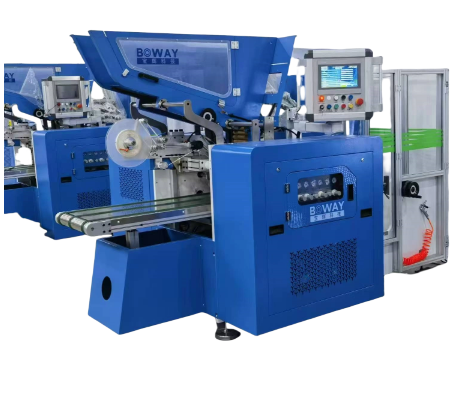
The paper rewinding machine sector continues to evolve, with several technological innovations delivering significant efficiency improvements:
Modern paper industry rewinding machines increasingly incorporate digital capabilities that enhance performance monitoring and optimization:
IoT connectivity for real-time performance monitoring
Predictive maintenance algorithms to prevent unplanned downtime
Production data analytics for continuous improvement
Remote diagnostics and troubleshooting capabilities
Integration with Manufacturing Execution Systems (MES)
BOWAY offers optional IoT remote monitoring modules for their rewinding machines, allowing paper processors to monitor performance, receive maintenance alerts, and analyze production data from anywhere in the world.
Next-generation tension control represents one of the most significant advancements in rewinding technology:
Multi-zone tension profiling for optimal roll structure
Dynamic tension adjustment based on material properties
Closed-loop feedback systems using high-precision load cells
Inertia compensation for improved acceleration/deceleration
Automated tension calibration routines
These advanced systems maintain precise tension regardless of speed changes or roll diameter variations, ensuring consistent product quality while minimizing material stress and potential breaks.
Quality verification systems integrated directly into rewinding machines provide immediate feedback on product specifications:
In-line thickness measurement with micrometer precision
Surface defect detection using high-resolution cameras
Edge quality verification through laser measurement
Tension profile analysis across the material width
Automated marking or rejection of non-conforming sections
These systems allow paper processors to identify and address quality issues immediately, rather than discovering problems after complete rolls have been produced.
Energy efficiency has become a priority in rewinding machine design, with several innovations reducing power consumption:
Regenerative braking systems that recover energy during deceleration
Variable frequency drives that optimize power usage based on load
Lightweight components that reduce inertial requirements
LED illumination for improved visibility with reduced power consumption
Standby modes for non-critical systems during production pauses
Modern energy-efficient paper rewinders typically consume 20-30% less power than previous-generation machines, delivering significant operational cost savings while supporting sustainability goals.
Installing a new paper rewinding machine is just the beginning—achieving maximum efficiency requires proper implementation and ongoing optimization:
Proper installation establishes the foundation for efficient rewinding operations:
Ensure adequate floor loading capacity and leveling
Provide proper electrical power with appropriate conditioning
Implement recommended environmental controls (temperature, humidity)
Allow sufficient space for material handling and maintenance access
Integrate with existing workflow and material handling systems
Professional installation services, like those offered by BOWAY with their 50+ country service network, ensure that machines are properly configured from the start, preventing performance issues and premature component wear.
Even the most advanced rewinding machine requires skilled operators to achieve maximum productivity:
Comprehensive initial training on machine functions and capabilities
Advanced training on recipe development and optimization
Troubleshooting skills to minimize downtime when issues occur
Regular skill refreshment as software and features are updated
Cross-training to ensure operational continuity
BOWAY provides comprehensive operator training with all their paper rewinding machines, ensuring that operators can maximize machine capabilities while maintaining safe operating practices.
Proper maintenance significantly impacts rewinding machine efficiency and longevity:
Follow manufacturer-recommended maintenance schedules
Implement condition-based monitoring for critical components
Stock essential spare parts to minimize downtime
Document all maintenance activities and outcomes
Analyze failure patterns to prevent recurring issues
Paper industry rewinding machines operate in challenging environments, with paper dust and other contaminants potentially affecting performance. Proper maintenance protocols are essential for maintaining precision and reliability over the equipment's lifespan.
Leading paper processors implement structured improvement methodologies:
Track key performance indicators (KPI) for rewinding operations
Analyze downtime causes and implement preventive measures
Optimize job scheduling to minimize changeovers
Regular review of material waste and quality metrics
Benchmark performance against industry standards
These systematic approaches to improvement typically yield 5-15% additional efficiency gains beyond the base capabilities of the rewinding machine itself.
Investing in modern paper rewinding technology delivers substantial financial benefits through multiple value streams:
Advanced rewinding machines generate direct cost reductions:
Labor savings (typically 40-60% reduction in operator requirements)
Material waste reduction (1-3% of material costs)
Energy consumption reduction (15-30% per unit produced)
Maintenance cost optimization through predictive approaches
Reduced quality-related rejections and returns
For a medium-sized paper converting operation processing 5,000 tons of material annually, these savings can amount to $200,000-$400,000 per year depending on material costs and previous operational efficiency.
Increased production capacity creates strategic options:
Growth without facility expansion
Reduced lead times for improved customer service
Ability to accept rush orders at premium prices
Reduction in outsourced processing costs
Greater flexibility in production scheduling
Many paper processors report that the ability to respond quickly to customer demands represents the most significant competitive advantage gained from their rewinding machine investments.
The quality improvements delivered by precision rewinding generate additional value:
Reduced customer returns and claims (50-70% reduction typical)
Premium pricing opportunities for higher-quality products
Reduced quality inspection costs
Enhanced brand reputation and customer loyalty
New market opportunities requiring higher precision
These quality-related benefits often match or exceed the direct cost savings, particularly for paper processors serving premium markets or highly regulated industries.
The comprehensive efficiency improvements delivered by advanced paper rewinding machines typically result in:
ROI periods of 18-36 months for most implementations
Net Present Value (NPV) 2.5-4 times the initial investment over a 10-year period
Internal Rate of Return (IRR) of 30-50% for typical installations
Payback periods shortened by 20-40% compared to initial projections due to secondary benefits
BOWAY's customizable paper rewinding machines can be configured to optimize ROI based on each processor's specific production requirements and efficiency objectives.
A1: The most critical features include precision tension control, accurate slitting capabilities, intuitive operator interface, rapid changeover design, and robust construction for long-term reliability and consistent performance.
A2: Modern paper rewinding machines typically improve production efficiency by 25-40% through increased speeds, reduced downtime, less material waste, and lower labor requirements compared to older equipment.
A3: Regular maintenance includes bearing lubrication, belt tension checks, knife blade replacement, sensor calibration, and control system updates. Preventive maintenance schedules vary by machine but are essential for optimal performance.
A4: Size your machine based on your maximum roll width, desired production speed, typical roll diameters, and facility space constraints. Add 20-30% capacity buffer for future growth and production flexibility.
A5: Many modern rewinding machines are designed to process multiple paper types through adjustable tension controls, interchangeable slitting systems, and stored recipe systems that recall optimal settings for each material.
A6: High-quality paper rewinding machines from reputable manufacturers like BOWAY typically deliver 12-15 years of productive service with proper maintenance, making them long-term capital investments.
A7: Installation and commissioning for paper rewinding machines typically requires 1-3 weeks depending on machine complexity, integration requirements, and operator training needs. Proper planning can minimize production disruption.
The paper industry continues to evolve, with increasing demands for efficiency, quality, and flexibility. Selecting the right rewinding machine represents a critical decision that will impact your operation's productivity and profitability for years to come. By carefully evaluating your specific requirements against the capabilities of available equipment, you can identify the optimal solution for your unique circumstances.
BOWAY's comprehensive range of rewinding machines—from specialized baking paper rewinding equipment to high-capacity industrial systems—offers solutions tailored to specific paper industry applications. With their 20 years of industry experience and installations in more than 50 countries, BOWAY has demonstrated the ability to deliver measurable efficiency improvements across diverse paper processing operations.
The best rewinding machine for your paper operation will balance performance requirements, automation needs, and budget considerations while providing a platform for future growth. By implementing the selection criteria and evaluation process outlined in this guide, you can confidently invest in technology that will enhance your competitive position in the demanding paper industry marketplace.
Remember that beyond the machine itself, proper implementation, operator training, and ongoing optimization are essential for maximizing the return on your investment. The right rewinding technology, properly applied, will deliver benefits far beyond simple productivity improvements—it will enhance product quality, increase operational flexibility, and ultimately strengthen your market position for years to come.


