Views: 0 Author: Site Editor Publish Time: 2026-10-08 Origin: Site
High-speed foil presses often outpace manual handling capabilities. This imbalance creates artificial bottlenecks at the end of your production line. Relying on manual labor for stacking and quality sorting leads to highly inconsistent cycle times. You also face higher scrap rates from handling damage. Furthermore, escalating labor costs eat directly into profit margins. Transitioning to a foil container sorting system shifts the limitation from human handling back to the mechanical capacity of the press. This strategic upgrade enables true continuous-run efficiency across your facility. This guide breaks down the operational impact, evaluation criteria, and implementation realities of automating your sorting and stacking processes. You will learn how these systems identify defects seamlessly without stopping production. We will explore methods to match equipment speeds safely. Finally, you will discover practical steps to deploy automation without disrupting your current factory operations.
Modern pneumatic and mechanical presses operate on incredibly rigid, fixed cycle times. They stamp out aluminum trays at hundreds of strokes per minute. Conversely, manual sorting operates on a highly variable cycle time. Human operators simply cannot match machine output indefinitely. This creates a severe business problem. You invest heavily in high-capacity machinery to drive revenue. Yet, you cap its maximum output by relying on human hands to catch, sort, and stack the final product. This mismatch forces line managers to dial back press speeds.
Hidden losses compound rapidly when humans dictate the pace of a mechanical press. These losses often manifest as micro-stops. Operators occasionally fall behind. They must pause the press to clear overflowing collection bins. Each micro-stop lasts only seconds. However, accumulating fifty micro-stops per shift destroys your Overall Equipment Effectiveness (OEE). The press idles while power consumption continues. You lose precious production volume you can never recover.
Manual handling also directly causes quality degradation. Aluminum foil containers feature delicate, precision-rolled rims. Human operators grab multiple trays quickly to keep up. This hurried grabbing crushes flanges and dents sidewalls. Handling delicate food-grade containers manually also introduces contamination risks. Sweat, dirt, or oils transfer onto the aluminum surface. This directly impacts your final yield. You end up paying laborers to accidentally manufacture scrap.
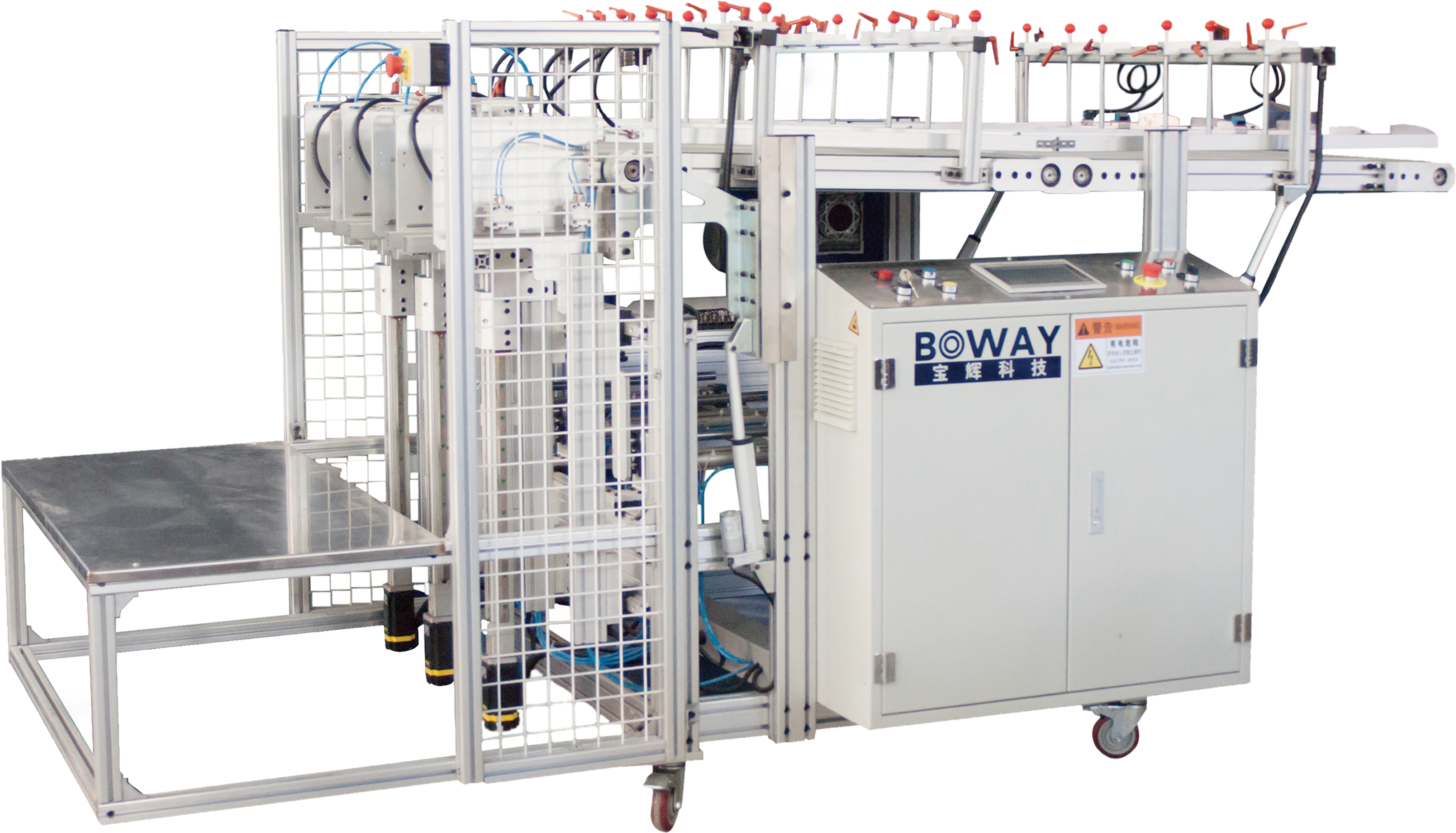
Automating your outfeed requires a deep understanding of post-press mechanics. Solution categories fall into specific operational phases. Equipment manufacturers design these modules to seamlessly transition a container from raw stamping to a retail-ready stack.
Spacing remains the most critical factor immediately following the mold outfeed. Containers exit the press at extreme velocities. They tend to overlap or nest tightly together if they hit a static surface. Conveyance modules utilize variable-speed vacuum belts. The initial intake belt runs slightly faster than the ejection speed of the mold. This speed differential physically pulls the containers apart. It creates a defined, consistent gap between each unit. Proper spacing prevents jams downstream.
Modern lines incorporate high-speed cameras and photoelectric sensors. They act as automated quality control inspectors. Sensors scan every single tray as it passes on the conveyor. They look for incomplete rims caused by foil tearing. They check for missing punch-outs on specialized vent-hole trays. Advanced vision systems also detect localized scrap buildup on the tray surface. They analyze these anomalies in milliseconds.
Identifying a bad tray means nothing if you must halt the machine to remove it. Pneumatic rejection solves this instantly. When the inspection system flags a defective unit, it sends a signal to a downstream air valve. A high-pressure air blast fires precisely as the bad tray crosses the rejection zone. The air blows the defective unit off the primary belt and into a recycling bin. Accepted products keep moving flawlessly. It requires zero human intervention.
The final stage focuses on precise nesting and inventory accuracy. Sorted containers drop into mechanical guide rails. They nest perfectly into vertical or horizontal stacks. Integrated sensors count each tray as it enters the stacker magazine. Once the stack reaches the pre-programmed count, a mechanical finger separates the batch. The system ejects the finished stack toward the packaging station. This guarantees you never under-ship or over-ship quantities to your clients.
Purchasing capital equipment requires strict alignment with production realities. You must assess how well a system solves your unique factory constraints. Building a features-to-outcomes framework helps clarify this evaluation process.
Foil Equipment Features-to-Outcomes Framework
| System Feature | Technical Capability | Production Outcome |
|---|---|---|
| Variable Vacuum Belts | Adjustable speed differentials for separation. | Eliminates overlapping and prevents outfeed jams. |
| Servo-Driven Guide Rails | Programmable width and depth adjustments. | Reduces product changeover times from hours to minutes. |
| High-Speed Air Solenoids | Millisecond response times for air blasts. | Rejects scrap at full press speed without line stoppage. |
| Modular Frame Design | Compact, segmented equipment footprints. | Integrates into existing tight factory layouts. |
Speed matching dictates ultimate success when integrating a foil container line with automated sorting. The sorting unit’s processing speed must comfortably exceed the press’s maximum output. If your press can run at 80 SPM, your sorter should handle at least 100 SPM. This headroom prevents backlogs during minor belt fluctuations. It ensures the sorter never becomes the new bottleneck.
Tooling changeover efficiency directly impacts your monthly uptime. Facilities rarely run one single container size all year. Switching from small tart pans to large catering trays requires massive equipment adjustments. Assess the time and complexity required to adjust guide rails, sensor heights, and stacker parameters. Look for systems utilizing servo-motors and saved digital recipes. Digital recipes allow operators to push a button and watch rails auto-adjust. Manual crank-wheels waste hours of production time.
Footprint and layout scalability require early measurement. Factory floor space carries a premium value. Assess whether the proposed modular design fits your existing facility constraints. Some lines require straight-outfeed configurations. Others utilize 90-degree turn conveyors to save linear space. Ensure you do not need to execute a complete line redesign just to fit a new stacker.
Automation is rarely a simple "plug-and-play" endeavor. Acknowledging these transparent assumptions prevents catastrophic deployment failures. Success demands precise mechanical alignment between the press outfeed and the sorter infeed. A misalignment of just five millimeters will cause containers to clip the belt edge, spin out of control, and jam the entire line.
Scrap evacuation represents the most common failure point in new installations. When a press cuts aluminum, it generates thin skeleton webbing and tiny metallic flakes. This scrap aluminum tangles easily in automated belts and rollers. It degrades vacuum suction. You must implement robust scrap choppers directly under the mold. You also need heavy-duty extraction vacuums positioned before the sorting phase. Removing the scrap before it touches the sorting belts guarantees long-term reliability.
Maintenance and sensor calibration require proactive scheduling. Stamping operations generate fine aluminum dust. Presses also use specialized lubricating oils to protect the molds. The combination of airborne oil and dust coats optical lenses rapidly. Blinded sensors trigger false rejects. They blow perfectly good trays into the scrap bin.
Best Practice: Assign operators a strict shift-based cleaning protocol. Wiping vision lenses and photoelectric reflectors with isopropyl alcohol takes two minutes but saves thousands of dollars in false rejects.
Operator training shifts dramatically when you install a foil container sorting system. You must upskill your manual laborers. They transition from physical catchers to machine supervisors. This transition requires structured learning.
Building an equipment shortlist requires strategic logic. You must demand hard evidence from equipment manufacturers during the procurement phase. Never accept video demonstrations of machines running standard paper or generic plastics. Demand a Factory Acceptance Testing (FAT) protocol using your specific foil gauges and your heaviest container profiles. Witnessing the machine handle your exact product proves its real-world viability.
Labor reallocation provides immediate financial benefits. Calculate savings beyond simple headcount reduction. Automation allows you to move workers away from repetitive strain tasks. You reallocate them to higher-value roles. They become quality assurance inspectors. They manage palletizing logistics. They supervise multiple automated lines simultaneously. This elevates your workforce capability and significantly reduces workers' compensation claims related to wrist and shoulder injuries.
Throughput gains drive the most aggressive ROI calculations. Historically, you likely constrained your presses to 70-80% capacity to accommodate manual catchers. Automation removes this ceiling.
Throughput Gain ROI Model (Example Chart)
| Metric | Manual Sorting Baseline | Automated Sorting Projection |
|---|---|---|
| Press Speed (SPM) | 60 Strokes/Min (Throttled) | 85 Strokes/Min (Max Capacity) |
| Micro-Stops per Shift | 45 Stops (Bin changes) | 2 Stops (Film/Foil changes) |
| Scrap Rate (Handling) | 3.5% (Crushed rims) | 0.2% (Machine error only) |
| Effective Yield per Shift | ~24,000 Good Units | ~39,000 Good Units |
Model your own return based on running your specific press at 100% mechanical capacity. The massive increase in sellable units per shift often pays for the sorting equipment within the first year of operation.
Your next-step actions should begin on your own factory floor. Conduct a rigorous time-study on your existing manual lines. Establish a firm baseline of current micro-stops, handling scrap rates, and true cycle times. You cannot measure improvement without knowing your current baseline. Once you have hard data, approach vendors for detailed quotes.
Upgrading to automated sorting is far less about adding a new machine. It is entirely about unlocking the trapped mechanical capacity of your existing press equipment. By removing the human speed limit, your facility can finally realize the full value of its capital press investments.
Take immediate action by requesting an end-of-line bottleneck audit from your engineering team today. Identifying exactly how much hidden capacity lies dormant in your press line is the first step toward modernizing your production floor.
A: Yes, modern systems accommodate various profiles. However, it requires adjustable guide rails and programmable sensor profiles. You must ask vendors about their average changeover times. Systems equipped with servo-driven adjustments and saved digital recipes perform changeovers in minutes, whereas manual crank-rail systems can take hours.
A: Systems utilize speed differentials and air blasts. Specialized outfeed belts run faster than the press ejection speed. This instantly creates necessary spacing. High-speed air nozzles also help separate tightly nested containers before they reach the critical sorting and inspection zones.
A: Typically no. Sorting systems integrate as secondary, standalone modules positioned directly at the outfeed. They do not alter the press mechanics. They must, however, be electronically synced with the press's emergency stop (E-stop) circuitry and speed controls to ensure synchronized, safe shutdowns.