Views: 0 Author: Site Editor Publish Time: 2026-08-04 Origin: Site
Upgrading to high-volume foil converting requires moving beyond standard equipment. Single-shaft or basic duplex machines often struggle under heavy production loads. Foil possesses unique physical properties making continuous processing quite difficult. It easily suffers from stretching, wrinkling, and edge tearing.
Miscalculating machine size, tension requirements, or changeover downtime severely damages productivity. Such errors lead to high scrap rates and missed production targets. Consequently, facilities waste expensive raw materials and compromise their bottom line.
This article provides a purely technical, evidence-based framework for machinery selection. It helps you specify the right equipment for your exact converting needs. You will discover how to align continuous output goals with precision web handling realities. By following these guidelines, you can ensure smooth operations, minimize material waste, and achieve consistent production volumes.
Manufacturers often mistakenly define capacity solely by maximum web speed. High volume means something completely different in actual floor operations. You must measure success by minimized downtime during roll changeovers and splice cycles. A high-volume output multi spindle foil rewinder relies heavily on sustained operation rather than brief bursts of extreme speed. When changeovers take several minutes, overall throughput drops significantly. Fast mechanical speeds cannot compensate for prolonged stationary periods.
You need to analyze the throughput bottleneck carefully. Look at the ratio of continuous running time versus indexing and unloading time. High-volume scenarios require this ratio to exceed 80/20. If your machine spends more than twenty percent of its shift idle, it is not truly high volume. Automated turret systems address this specific bottleneck. They allow operators to remove finished rolls while the machine continues winding new ones.
You must also address significant material limitations. Foil converting must balance operating speed with strict tensile limits. Aluminum and copper foils tear or deform easily under excess strain. Running a machine at maximum speed often exceeds these delicate limits. Yield loss increases exponentially when operators push machines beyond safe web handling parameters. Therefore, high-volume output requires precision control just as much as rapid web movement.
Evaluating multi spindle foil rewinder specifications requires a detailed look at mechanical tolerances. You cannot rely on generic converting benchmarks. Foil demands hyper-specific parameters to process efficiently without wrinkling or snapping.
You must first establish strict parameters for your web dimensions. Specify the maximum web width alongside minimum and maximum foil thickness. Thickness is typically measured in microns. Thin battery foils perform very differently than thicker food-grade foils. Wide webs introduce sagging risks across the center of the span. Accurate specifications ensure the machine frame and rollers provide adequate support.
Determine your required core sizes early in the process. Facilities typically utilize 3-inch or 6-inch cores depending on the final application. You should evaluate differential friction shafts for all foil applications. These shafts compensate for gauge variation across the foil web. If one side of the master roll is slightly thicker, differential shafts allow individual slit rolls to slip slightly. This slipping ensures uniform roll density across the entire rewind shaft.
Proper tension control dictates the success of any foil rewinding operation. You need strict zone isolation across the entire machine path. Independent tension zones must exist at the unwind, slitting, and rewind stations. We recommend using multi-axis AC servo drives paired with precise load cell feedback. Load cells detect minute tension variations in real-time. The servo drives then adjust speeds instantly to maintain perfect web stability.
Taper tension control is equally critical for finished roll quality. As the foil roll diameter increases, the outer layers exert crushing pressure on the inner layers. Taper tension profiles gradually decrease the winding tension as the roll grows. This technique prevents telescoping edges. It also prevents "starving" or collapsing the inner core. Advanced PLCs allow you to program customized taper tension curves for different foil alloys.
Slitting methods drastically impact edge quality and particulate generation. You must compare shear slitting versus razor slitting for your specific application. Shear slitting utilizes interlocking top and bottom circular blades. It provides incredibly clean foil edges and minimizes conductive dust. Razor slitting is cheaper but often creates micro-fractures on metal foil edges. For high-volume environments, shear slitting is almost always the superior choice.
You should also assess automated knife positioning systems. Manual blade adjustment consumes massive amounts of operator time. Automated systems move knives into position using motorized linear guides. This reduces setup time between runs from hours to mere minutes. Rapid changeovers keep the machine running and preserve the 80/20 production ratio.
Common Tension Zones in Foil Converting
| Machine Zone | Primary Function | Control Mechanism | Typical Defect if Uncontrolled |
|---|---|---|---|
| Unwind Zone | Feeds master roll into machine | Pneumatic brake or AC regenerative motor | Web snapping or wrinkling |
| Draw/Slit Zone | Pulls material through knives | Nip rollers with AC servo drives | Poor edge cut, blade wandering |
| Rewind Zone | Builds finished slit rolls | Differential friction shafts & load cells | Telescoping, core crushing, dishing |
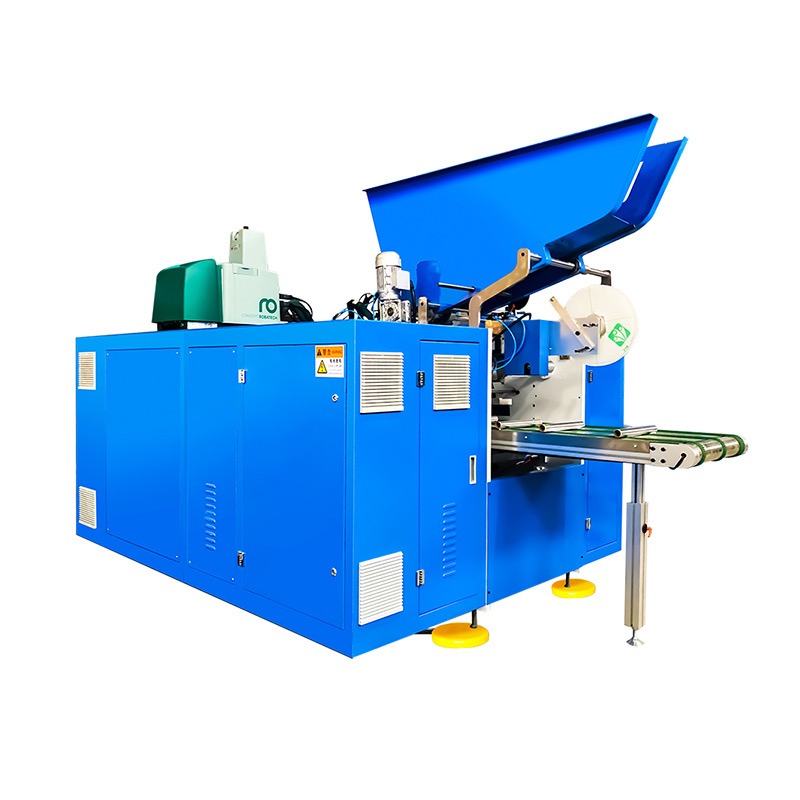
Choosing the base architecture determines your maximum operational ceiling. Manufacturers generally choose between standard duplex systems and turret configurations. A standard multi spindle foil rewinder often features a basic duplex design. These machines utilize two rewind shafts. They require a lower initial capital expenditure. However, the machine must come to a complete stop to unload finished rolls. They remain suitable for moderate volumes where downtime is acceptable.
Turret multi-spindle systems offer a fundamentally different workflow. They incorporate four or more shafts mounted on a rotating indexing turret. This design allows continuous winding. As one set of rolls finishes, the turret rotates. Empty cores move into the winding position immediately. Meanwhile, operators unload finished rolls from the outer position. The machine never stops spinning the web.
You must weigh the initial investment against long-term throughput. Turret systems certainly require a larger physical footprint. They also demand a higher initial investment. However, they deliver a verifiably faster return on investment in 24/7 converting operations. By practically eliminating idle time, turrets produce significantly more finished rolls per shift. You recoup the higher initial equipment cost through sheer volume and reduced labor hours.
Installing industrial converting equipment requires thorough facility preparation. High-volume machinery imposes severe demands on factory infrastructure. You must look beyond simple square footage when planning the installation.
Sizing a multi-spindle rewinder requires auditing the facility's floor load capacity. Master rolls of aluminum or copper foil weigh several tons. Cantilevered turret designs concentrate massive dynamic forces on small floor sections. You must ensure your concrete foundation can support these static and dynamic structural loads. Failure to reinforce the floor leads to machine vibration. Vibration destroys tension control and misaligns slitting knives.
You must map out aggressive utility requirements early. Map out pneumatic needs carefully. Differential shafts and emergency braking systems require clean, dry compressed air. Pressure drops cause instant web tension failures. Additionally, you must secure robust electrical power. Multi-axis servo drives pull significant amperage during rapid acceleration phases. Ensure your main electrical panels can handle these peak loads without tripping.
High-speed indexing creates substantial safety hazards. Turret rotation involves heavy steel components moving rapidly. You must integrate advanced safety systems. Advanced light curtains prevent turret rotation if an operator breaches the zone. Interlocked perimeter guarding is mandatory. Furthermore, integrate automatic roll pushers and unloading trees. Heavy foil rolls cause severe ergonomic injuries if unloaded manually. Mechanical assist devices mitigate these workplace injury risks entirely.
Standard off-the-shelf equipment rarely satisfies specialized manufacturing requirements. High-tech sectors often demand unique material handling characteristics. In these scenarios, a custom multi spindle foil rewinder becomes a necessity rather than a luxury.
Cleanroom and specialty applications represent the most common custom requirement. Battery anode and cathode foils require strict contamination control. Copper or zinc particles destroy lithium-ion battery cells. Pharmaceutical blister foils similarly demand sterile environments. Custom machines utilize 304 or 316 stainless steel construction to prevent rusting and flaking. They also incorporate specialized contact-free web cleaners and localized particle extraction systems near the slitting blades.
Bespoke automation represents another driver for custom engineering. High-volume environments eventually outgrow manual interventions. Custom builders can integrate robotic roll handling systems. They can design automatic core loading hoppers. Some applications even require auto-splicing mechanisms to attach new master rolls on the fly. Standard catalog models simply do not support this level of complex mechanical integration.
Legacy integration challenges often force custom designs. Modern rewinding lines rarely operate in isolation. They must communicate with inline coating operations or upstream rolling mills. Customizing the machine's PLC allows it to handshake seamlessly with legacy plant floor software. This SCADA integration ensures your entire production floor shares real-time data regarding line speeds, tension alarms, and roll defect tracking.
Selecting the right machinery partner determines the long-term success of your converting line. Do not choose a vendor based solely on brochure specifications. You need a multi spindle foil rewinder supplier with proven, highly specific metallurgical handling experience.
First, evaluate their pure engineering competence. Ask for demonstrable case studies. Have they handled the exact micron thickness and alloy of your foil? Winding paper or plastic film differs greatly from winding copper foil. If they lack experience with your specific material, you will pay for their learning curve. Request references from similar high-volume battery or packaging plants.
Second, demand rigorous Factory Acceptance Testing (FAT). The FAT must utilize your specific material rolls. Never accept a test run on substitute materials. The supplier must prove tension control stability and indexing speeds before shipment. They must demonstrate that edge quality meets your quality assurance standards. A successful FAT guarantees the machine will perform properly once it hits your floor.
Finally, evaluate their service and lifecycle support. A machine running 24/7 will inevitably require maintenance. Investigate their local spare parts inventory. Assess their remote diagnostic capabilities. Modern PLCs should allow technicians to troubleshoot issues via secure VPN connections. Verify the availability and response time of their field service engineers. Fast support minimizes catastrophic downtime in high-volume settings.
A: Tension ranges depend entirely on foil thickness and temper. We measure this in Pounds per Linear Inch (PLI). Thin annealed foils require extremely low PLI (often under 0.5 PLI) to prevent stretching. Thicker hard-temper foils tolerate higher PLI. Closed-loop servo systems and sensitive load cells are mandatory to maintain these exact tension profiles without fluctuating.
A: A turret system saves massive amounts of time per shift. Standard duplex machines typically require 3 to 5 minutes of dead stop time to unload and reload cores. Turret rewinders reduce this idle window to merely 0 to 30 seconds for the indexing rotation. This shift allows nearly continuous web running, drastically increasing daily yield.
A: Yes. Differential friction shafts specifically compensate for gauge bands (uneven thickness) across the master roll. They use internal pneumatic bladders pressing against independent slip rings. If one slit roll builds up faster due to thicker material, its ring slips slightly relative to the main shaft. This ensures uniform roll density everywhere.
A: Safety compliance is critical for automated turrets. Machines must meet OSHA and CE standards. Mandatory features include advanced area laser scanners and safety light curtains that halt indexing if breached. Physical perimeter guarding around the rotation zone is required. Automated roll pushers are also essential to protect operators from pinch points and lifting injuries.