Views: 0 Author: Site Editor Publish Time: 2026-10-01 Origin: Site
Food packaging manufacturers face relentless margin compression today. Raw material prices fluctuate constantly, and retailers demand lower costs for finished goods. Semi-automatic setups have hit their operational ceilings. They suffer from high labor costs, inconsistent cycle times, and unoptimized scrap rates. You can no longer rely on manual workflows to stay competitive in this market.
Automation represents a fundamental shift. It is not merely a speed upgrade. It changes your operation from variable production costs to fixed, predictable investments. You gain total control over your manufacturing margins by eliminating human error. Machinery runs at a constant pace, stabilizing your daily output.
This article explores specific operational metrics. We define what changes when you transition to an automated setup. We establish a clear baseline for evaluating capital expenditure. You will learn how modern architectures improve yield. We will also cover essential criteria for vendor selection and outline hidden rollout complexities.
Transitioning away from semi-automatic equipment requires a clear understanding of your current inefficiencies. Manual processes introduce physical variables. These variables actively disrupt production schedules and degrade product quality. Upgrading your equipment eliminates these inconsistencies entirely.
Labor Dependency and Ergonomics
Manual collection and stacking processes are highly prone to fatigue. Operators must repeatedly bend, reach, and count aluminum containers. This repetitive motion creates immediate bottlenecks during long shifts. Inline automatic stacking and counting eliminate this physical strain. Machines collect the products, count them precisely, and deliver perfect stacks to the packaging area. You drastically reduce labor dependency and improve workplace ergonomics.
Scrap Management and Yield
Semi-automatic machines rely on operators to handle aluminum webbing and scrap. Manual scrap handling is messy, slow, and takes up valuable floor space. Automated systems utilize localized suction mechanisms. They instantly pull waste material away from the die area. An integrated baler then compresses this scrap into dense blocks. This direct automation improves your overall material yield and maximizes your recycling rebate values.
Consistency and Quality Control
Manual feeding systems often suffer from micro-variations. Even a millimeter of misalignment causes wrinkling along the container rim. Automated tension control and precision servo-feeding eliminate these micro-variations entirely. The machine feeds the exact amount of aluminum foil required for each stroke. This precision guarantees uncompromised container rims, reducing your daily defect rate.
Throughput Predictability
Many plant managers focus solely on maximum machine speed. You should instead focus on sustained yield. Automation stabilizes your output across a full 24-hour production cycle. Operators no longer dictate the pace of manufacturing. The equipment maintains a continuous, predictable rhythm. This shift allows your sales team to confidently quote lead times based on hard data.
Workflow Comparison: Semi-Automatic vs. Automated
| Metric | Semi-Automatic Workflow | Fully Automated Workflow |
|---|---|---|
| Labor Requirement | 3-4 operators per line | 1 operator supervising multiple lines |
| Scrap Handling | Manual collection, high downtime | Inline suction and automatic baling |
| Quality Control | Subject to human fatigue and error | Sensor-driven, consistent precision |
| Output Predictability | Variable based on shift dynamics | Highly stable 24-hour sustained yield |
Understanding the anatomy of modern equipment helps you make informed purchasing decisions. An automatic foil container production line consists of several synchronized modules. Each module plays a distinct role in turning raw aluminum rolls into market-ready packaging.
Decoiler and Tension Control
The production journey begins at the decoiler. Precision servo-feeders manage the unwinding of the aluminum coil. They apply exact tension to prevent foil tearing during rapid acceleration. This tension control ensures exact pitch progression into the pressing area. Consistent tension directly correlates to fewer machine jams and less material waste.
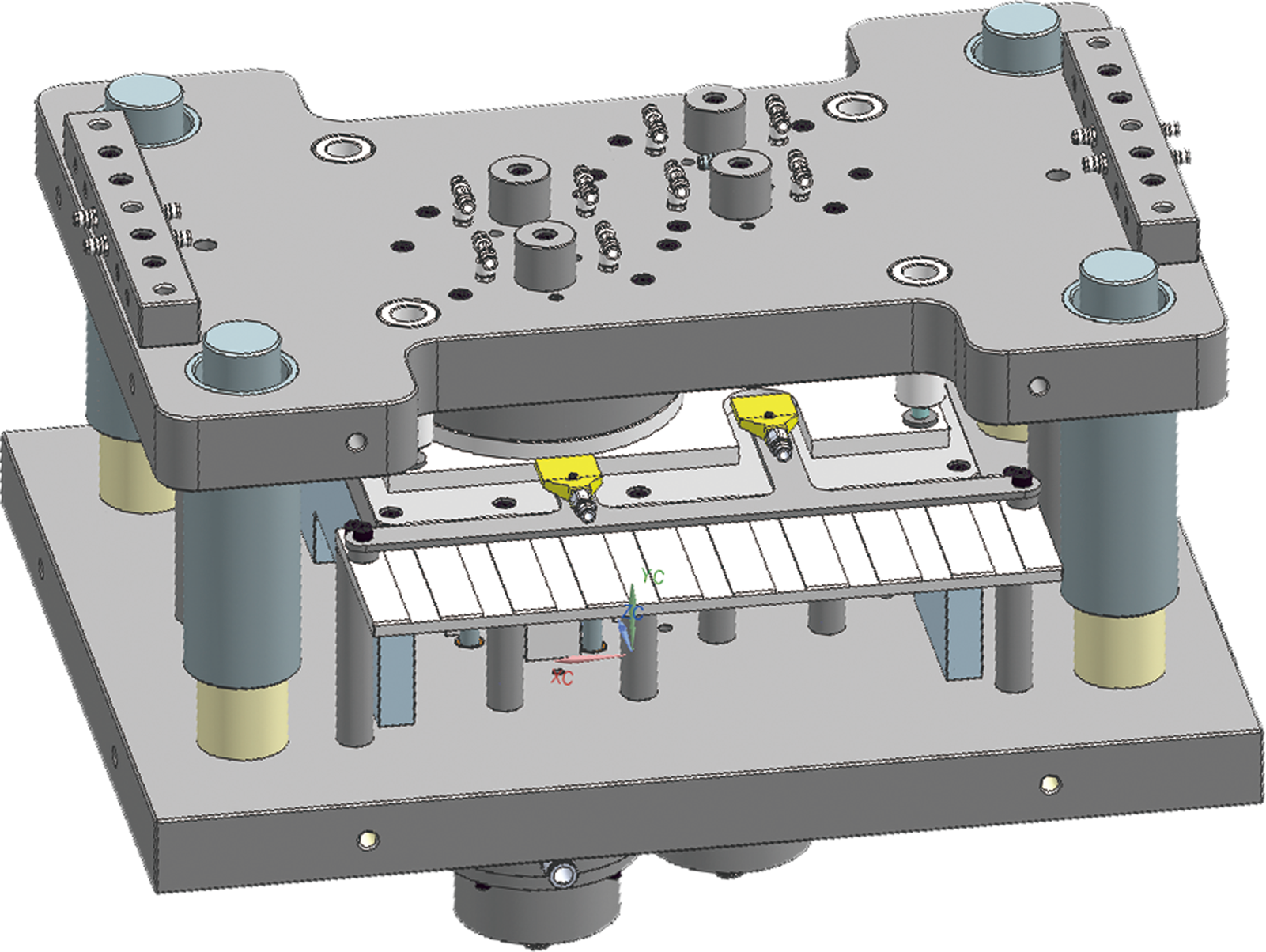
The press unit is the beating heart of your production line. C-Frame presses feature an open-front design. They are ideal for high accessibility and faster mold changes. Operators can easily reach the tooling area for maintenance. You typically use C-Frame presses for standard single-cavity or double-cavity production runs. They offer an excellent balance of speed and usability for mid-sized operations.
High-volume manufacturers often require H-Frame architectures. These presses utilize a closed-frame design to support high-tonnage operations. They provide superior structural rigidity. You need an H-Frame press for multi-cavity precision manufacturing. They prevent deflection during the stamping process. This rigidity is mandatory for meeting strict quality control standards on complex container geometries.
Automated Collection and Stacking
Modern lines completely replace manual counting. Vacuum stackers gently lift the finished containers from the die. They drop them onto synchronized conveyors. The system accurately counts each unit, grouping them into exact batch sizes. This ensures your downstream packaging teams receive perfectly tallied stacks ready for boxing.
Scrap Aspiration and Baling
Waste management happens in real-time. Scrap aspiration mechanics instantly clear the die area after every stroke. High-velocity air pulls the skeletal foil waste into a dedicated chute. An inline baler compresses this continuous web into manageable blocks. This seamless process prevents mechanical jams and keeps the production floor clean.
Not all machinery performs equally under heavy industrial stress. You must evaluate specific technical criteria before authorizing capital expenditure. A true high-speed foil container line requires robust engineering and smart controls.
Tonnage and Mold Compatibility
You must match your press capacity to your current and future mold portfolios. Standard capacities include 45T, 63T, and 80T models. A 45T press handles basic single-cavity molds easily. Multi-cavity molds require the heavier stamping force of a 63T or 80T machine. Buying an undersized press severely limits your future product expansion capabilities.
Changeover Efficiency (SMED)
Your machine is unprofitable when it sits idle. You must evaluate the machinery for quick die-change systems. The Single-Minute Exchange of Die (SMED) framework is critical here. A fast machine loses its advantage if operators need a full shift to change molds. Look for hydraulic clamping systems and accessible die spaces. These features reduce downtime and keep your OEE high.
PLC and HMI Capabilities
The brain of your equipment lives in the Programmable Logic Controller (PLC). Operators interact through the Human-Machine Interface (HMI). You must assess this control interface for advanced fault diagnostics. It should feature recipe saving capabilities. This parameter memory allows operators to switch between different container profiles instantly. Advanced systems also allow seamless integration with your factory ERP network.
Component Origins
You must inspect the sourcing of critical internal components. Long-term maintenance heavily relies on quality parts.
Best Practice: Always request a detailed Bill of Materials (BOM) from the equipment manufacturer. Verify that local technicians can easily source replacement parts in your region.
Upgrading your facility involves more than just plugging in a new machine. You must prepare for several implementation realities. Ignoring these risks leads to delayed production schedules and unexpected cost overruns.
Facility Infrastructure Constraints
You must address the hidden costs of upgrading your facility. High-tonnage presses draw significant electrical current. You may need to upgrade your existing electrical panels. Pneumatic air supply consistency is equally critical. Vacuum stackers require stable, moisture-free compressed air to function reliably. Additionally, you must verify your concrete floor reinforcement. Heavy H-Frame presses create intense vibrations that can crack inadequate flooring.
Operator Skill Transition
Your workforce must transition from physical labor to machine supervision. This shift requires dedicated training programs. Operators must learn PLC troubleshooting. They must understand servo-feeder calibration. You cannot expect manual laborers to operate digital interfaces without proper education. Invest time in technical upskilling before the machine arrives on your floor.
Mold Commissioning Risks
Many manufacturers assume their old molds will work perfectly on new machines. This is a dangerous assumption. Legacy molds from semi-automatic lines often underperform on high-speed setups. They may lack the necessary structural reinforcement. You might need to adapt the air-ejection mechanisms. Upgraded stacking mechanisms also require specific geometric clearances that older molds may not possess.
Preventative Maintenance Overhead
Automation certainly reduces direct labor costs. However, it increases your need for specialized, routine maintenance. High-speed equipment requires strict lubrication cycles. Technicians must perform regular sensor alignments. You must establish a dedicated preventative maintenance schedule to prevent catastrophic mechanical failures.
Common Implementation Steps:
Securing budget approval requires a solid financial model. You must demonstrate how the equipment pays for itself over time. Selecting the right vendor ensures you achieve these financial targets without unnecessary friction. Choosing a reliable automatic foil container production line partner determines your long-term success.
CapEx vs. OpEx Breakdown
Your Return on Investment (ROI) model must balance Capital Expenditure (CapEx) against Operational Expenditure (OpEx) savings. Calculate your current daily labor costs. Compare this to the reduced headcount required for an automated line. Factor in your increased material yield. A reliable servo-feeder drastically reduces your scrap rate. You must model this reduced waste as direct profit. Most high-volume manufacturers achieve a payback period between 14 and 22 months.
Vendor SLA and Support Evaluation
You are buying a long-term partnership, not just metal. Evaluate vendors based on their Service Level Agreements (SLA). Prioritize manufacturers who offer remote diagnostic support. If your machine faults, engineers should be able to log in securely and troubleshoot the PLC remotely. Ask about their spare parts lead time. A vendor with local distribution hubs minimizes your downtime. Finally, insist on rigorous Factory Acceptance Testing (FAT) protocols. You must witness the machine running your specific molds before authorizing shipment.
Common Mistake: Never base your vendor selection solely on the initial sticker price. Cheaper machines often lack structural rigidity, leading to frequent breakdowns and poor container quality.
Upgrading to an automated production line is a crucial strategic move. It stabilizes your production variables and allows you to scale volume reliably. You eliminate the physical bottlenecks associated with manual labor. You gain precise control over your raw material usage and scrap generation.
The best automated systems strike a perfect balance. They offer high strokes per minute alongside fast, efficient changeovers. They integrate robust safety features to protect your workforce. Precision engineering ensures your final product meets the highest industry standards.
Your next action is clear. Audit your current scrap rates and record your average changeover times. Gather this data before requesting vendor quotes. You must ensure you buy equipment to solve actual operational gaps rather than speculative capacity. Taking these deliberate steps guarantees a profitable transition to automated manufacturing.
A: A fully automated line requires significantly more space than a standalone press. You must accommodate the decoiler, press unit, vacuum stacker, and scrap baler in a linear arrangement. You also need safe clearance zones for material handling aisles and forklift access. Expect to allocate roughly three times the footprint of a manual press setup.
A: Yes, but they often require modifications. Legacy molds may need structural reinforcement to handle increased stamping forces and faster cycle speeds. You might also need to adapt the internal air-ejection ports. These adaptations ensure the finished containers properly interface with the new automated vacuum stackers.
A: You can expect a dramatic improvement. Manual operations often suffer a 12-15% scrap rate due to inconsistent feeding. Servo-precision step feeding optimizes the pitch distance between strokes. This technology routinely reduces scrap down to optimized geometric minimums, often below 8%, maximizing your raw material yield.
A: Traditional manual changeovers frequently take 2 to 4 hours. Modern automated lines utilize quick die-change systems and hydraulic clamping. Combined with pre-saved PLC recipe parameters, operators can effectively reduce total tooling downtime to under 45 minutes. This efficiency keeps your machine actively producing revenue.