
Views: 0 Author: Site Editor Publish Time: 2025-08-25 Origin: Site
Rewinding machines play a crucial role in the modern manufacturing landscape, serving as essential equipment for industries ranging from packaging to textiles. These specialized machines are designed to efficiently process, convert, and finish rolled materials with precision and consistency. Whether you're looking to understand basic operations or advanced applications, this comprehensive guide explores the multifaceted functions of rewinding machines across various industrial contexts.
The primary function of a rewinding machine is to unwind material from a parent roll, process it according to specific requirements, and then rewind it onto new cores. This seemingly simple process encompasses several sophisticated operations that deliver significant manufacturing advantages.
Rewinding machines perform essential material transformation functions:
Unwinding: Controlled release of material from the parent roll
Tension Control: Maintaining precise tension throughout the process
Guiding: Ensuring accurate material alignment
Processing: Applying various treatments or modifications
Rewinding: Creating new rolls with specific characteristics
These functions enable manufacturers to convert bulk materials into more manageable, application-specific formats. For instance, large jumbo rolls can be transformed into smaller rolls suitable for end-use applications or further processing.
One of the most valuable functions of a slitter rewinder machine is its ability to cut wide rolls into narrower ones. This capability:
Converts wide-width parent rolls into multiple narrower rolls
Creates customer-specific widths from standard manufacturing widths
Enables efficient material utilization and reduces waste
Produces rolls that meet exact dimensional specifications
Modern slitting and rewinding machines employ various cutting technologies, including:
| Slitting Method | Best For | Advantages |
|---|---|---|
| Razor Slitting | Films, thin materials | Clean edges, minimal dust |
| Shear Slitting | Paper, foil, laminates | Precise cuts, longer blade life |
| Score Slitting | Thicker materials | Higher speeds, handles tough materials |
| Crush Slitting | Nonwovens, textiles | No dust, cost-effective |
| Laser Slitting | Specialty applications | No physical contact, high precision |
Beyond basic material conversion, rewinding machines serve a critical quality control function:
Detecting and removing defective sections of material
Ensuring consistent roll quality throughout the length
Improving material flatness and tension profile
Identifying inconsistencies in thickness, color, or surface quality
Creating documented quality records for each processed roll
These quality enhancement capabilities make rewinding machines essential for industries with strict quality requirements, such as pharmaceuticals, food packaging, and electronics.
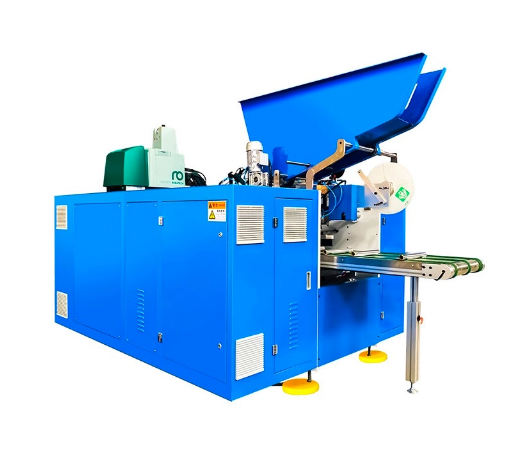
Different industries require specialized rewinding machines to handle specific materials and achieve particular outcomes. Understanding these variations helps in selecting the appropriate equipment for your application.
The Aluminum Foil Rewinding Machine is specifically designed to handle the unique characteristics of aluminum foil, including:
Precise tension control to prevent tearing or stretching
Special edge handling to avoid damage to the delicate material
High-precision slitting to create clean edges without burrs
Dust-free environment controls to maintain product purity
Advanced web alignment systems to ensure consistent rewinding
These machines are commonly used in:
Food packaging industry for producing household aluminum foil
Pharmaceutical packaging for blister packs and sachets
Industrial applications requiring specific foil widths and thicknesses
HVAC industry for insulation materials
BOWAY's Aluminum Foil Rewinding Machines feature advanced tension control systems that automatically adjust according to roll diameter changes, ensuring consistent tension throughout the entire rewinding process. This results in uniformly wound rolls with consistent hardness from core to exterior.
The Plastic Film Rewinding Machine addresses the unique challenges of working with various plastic substrates:
Handling static electricity issues through specialized discharge systems
Managing film stretching through precise tension controls
Controlling temperature to prevent film deformation
Processing various film types including BOPP, PET, PE, and PVC
Providing options for surface treatment during rewinding
Applications for these machines include:
Packaging film production
Industrial films processing
Agricultural film preparation
Consumer product packaging
The latest Plastic Film Rewinding Machines from BOWAY incorporate anti-static systems and advanced edge-guiding technology that maintains alignment within ±0.5mm, ensuring perfect edge alignment even at high operational speeds.
The Baking Paper Rewinding Machine performs specialized functions for food-grade materials:
Handling heat-resistant papers with specialized tension systems
Maintaining food-safe processing environments
Providing precise cut-to-length capabilities for sheet applications
Offering options for silicone coating application during processing
Ensuring dust-free operations for food safety compliance
These machines are essential for:
Commercial bakeries producing pre-cut baking papers
Food service industry suppliers
Consumer goods manufacturers
Industrial food processors
BOWAY's Baking Paper Rewinding Machines feature food-grade components and contamination prevention systems, making them compliant with stringent food safety regulations while maintaining high production efficiency.
Modern rewinding machines often combine multiple functions to increase production efficiency:
Integrated slitting and rewinding
Inspection and rewinding
Printing and rewinding
Coating and rewinding
Laminating and rewinding
These multi-functional systems reduce handling requirements, decrease production time, and improve overall efficiency by eliminating the need for multiple separate processing steps.
Selecting the appropriate rewinding machine requires careful consideration of numerous technical factors that impact performance, efficiency, and quality outcomes.
When evaluating rewinding machines, consider these essential specifications:
| Parameter | Description | Typical Range | Impact on Performance |
|---|---|---|---|
| Maximum Web Width | The widest material the machine can process | 500-3000mm | Determines production versatility |
| Operating Speed | Linear processing speed | 50-800 m/min | Affects production capacity |
| Tension Range | Adjustable tension applied to the material | 5-500 N | Influences material handling quality |
| Rewind Diameter | Maximum finished roll diameter | 400-1500mm | Affects run time between roll changes |
| Core Diameter | Size of cores that can be accommodated | 25-152mm | Determines compatibility with downstream processes |
| Slitting Options | Available slitting technologies | Razor, shear, crush | Impacts cut quality for different materials |
| Automation Level | Degree of automated operation | Manual to fully automatic | Affects labor requirements and consistency |
Modern rewinding machines incorporate sophisticated control systems that enhance functionality and ease of operation:
Programmable Logic Controllers (PLCs) for precise operational control
Recipe management for quick changeovers between different products
Servo motor drives for accurate tension and speed regulation
Touchscreen Human-Machine Interfaces (HMIs) for intuitive operation
Remote diagnostics and monitoring capabilities
Data logging and quality reporting functions
Integration with plant-wide control systems
These advanced control features not only improve operational efficiency but also provide valuable data for quality control and process improvement initiatives.
Practical considerations for rewinding machine installation include:
Floor space requirements (including operational clearances)
Ceiling height constraints for large machines
Electrical supply specifications (voltage, phase, current)
Compressed air requirements (pressure, volume)
Environmental controls (temperature, humidity, cleanliness)
Ancillary equipment space (control cabinets, unwinding stands)
BOWAY offers rewinding machines in various configurations to accommodate different space constraints, including compact designs for facilities with limited floor space without compromising on functionality or performance.
The versatility of rewinding machines makes them indispensable across numerous industries, each with specific requirements and applications.
In the packaging sector, rewinding machines serve critical functions:
Converting large master rolls into sizes suitable for packaging lines
Creating custom widths for specific packaging applications
Ensuring consistent material quality for high-speed packaging operations
Preparing materials for lamination and other converting processes
Inspecting materials before they enter critical packaging processes
A major flexible packaging manufacturer implemented BOWAY's slitting and rewinding machine with dual rewinding shafts, increasing production capacity by 35% while reducing material waste by 12% through more precise tension control and advanced edge guiding systems.
For paper and print applications, rewinding machines provide:
Roll-to-roll processing of printed materials
Precise tensioning to prevent registration issues
Quality inspection of printed output
Conversion of wide printing rolls into narrower customer rolls
Preparation of materials for binding and finishing operations
A commercial printing company upgraded to BOWAY's high-speed rewinding machine with integrated inspection systems, reducing quality-related returns by 28% and increasing production throughput by 40%.
In the technical textiles sector, rewinding machines perform specialized functions:
Processing delicate or stretchy materials with precise tension control
Creating specific roll formats for downstream converting
Inspecting for defects in technical fabrics
Applying consistent tension to maintain material properties
Preparing materials for lamination or coating processes
A medical textiles manufacturer utilized BOWAY's specialized rewinding machine to process sensitive nonwoven materials for surgical applications, achieving consistency in roll hardness that was previously unattainable with their older equipment.
For film and foil applications, rewinding machines address unique challenges:
Managing static issues in plastic film processing
Handling delicate materials without damage
Creating customer-specific roll dimensions
Ensuring consistent tension for dimensionally sensitive materials
Providing clean, burr-free edges on slit materials
An electronics component manufacturer implemented BOWAY's Aluminum Foil Rewinding Machine with advanced edge control systems, reducing edge-related defects by 65% and improving overall yield by 8.5%.
The evolution of rewinding machine technology continues to deliver enhanced performance, efficiency, and quality outcomes for manufacturers.
Modern rewinding machines incorporate advanced automation features:
Automatic splice detection and handling
Robotic roll handling and packaging
Self-adjusting tension based on material properties
Predictive maintenance systems
Integration with Manufacturing Execution Systems (MES)
Real-time performance monitoring and analytics
Remote operation capabilities
These automation advancements reduce labor requirements, improve consistency, and enable continuous operation with minimal operator intervention.
Advanced vision systems enhance rewinding machine capabilities:
100% surface inspection during rewinding
Defect detection and classification
Automatic defect marking or removal
Registration control for printed materials
Edge position monitoring and adjustment
Roll structure analysis
Quality documentation with defect mapping
BOWAY's latest slitter rewinder machines incorporate high-resolution camera systems capable of detecting defects as small as 0.1mm at full production speed, ensuring comprehensive quality control.
Sustainability considerations have driven improvements in rewinding machine design:
Energy-recuperating drive systems
Low-inertia components for reduced energy consumption
Optimized acceleration/deceleration profiles
Standby mode features during production gaps
LED lighting for improved visibility with lower energy use
Reduced compressed air consumption
Heat recovery systems for processing areas
These efficiency improvements not only reduce operating costs but also align with corporate sustainability initiatives and regulatory requirements.
Maximizing the performance and lifespan of rewinding machines requires systematic maintenance and operational procedures.
A comprehensive maintenance program for rewinding machines typically includes:
| Component | Inspection Frequency | Maintenance Actions |
|---|---|---|
| Slitting Systems | Daily/Per shift | Blade inspection, rotation or replacement |
| Tension Control | Weekly | Calibration verification, sensor cleaning |
| Drive Systems | Monthly | Belt tension check, lubrication, alignment |
| Bearings | Quarterly | Lubrication, noise/vibration assessment |
| Control Systems | Semi-annually | Software updates, backup procedures |
| Machine Structure | Annually | Alignment check, fastener tightening |
Following manufacturer-recommended maintenance schedules significantly extends equipment life and maintains optimal performance. BOWAY provides detailed maintenance documentation and training with all rewinding machine installations.
The human element remains critical to rewinding machine performance:
Comprehensive initial operator training
Regular skill refresher courses
Documentation of standard operating procedures
Cross-training for operational flexibility
Troubleshooting skill development
Safety training specific to rewinding operations
Understanding of material properties and handling requirements
Investing in operator knowledge and skills delivers substantial returns through improved efficiency, reduced waste, and higher quality output.
Continuous improvement of rewinding machine operations requires systematic performance monitoring:
Tracking key performance indicators (KPIs)
Analyzing waste and defect trends
Documenting changeover times and procedures
Benchmarking performance against industry standards
Regular review of process parameters versus material requirements
Optimization of speed versus quality trade-offs
Analysis of energy consumption patterns
These monitoring practices identify opportunities for operational improvements and help justify equipment upgrades when necessary.
Investing in advanced rewinding machines delivers significant economic benefits that justify the capital expenditure.
Modern rewinding machines deliver substantial productivity gains:
20-50% increase in production speeds compared to older equipment
30-60% reduction in setup and changeover times
40-70% decrease in unplanned downtime
15-35% improvement in overall equipment effectiveness (OEE)
Capability for 24/7 operation with minimal supervision
These productivity improvements often enable manufacturers to meet growing demand without facility expansion or additional shifts.
Enhanced quality control functions in modern rewinding machines reduce costs associated with quality issues:
50-80% reduction in customer returns and complaints
30-60% decrease in material waste from quality defects
40-70% reduction in rework requirements
Elimination of separate quality inspection steps
Reduced sampling requirements through continuous monitoring
For many manufacturers, these quality-related savings alone can justify the investment in advanced rewinding equipment.
Automation features in contemporary rewinding machines impact labor requirements:
Reduction in direct labor per unit of production
Reallocation of personnel to higher-value activities
Decreased training requirements for basic operations
Reduced reliance on specialized skills for standard production
Improved safety with less manual material handling
While advanced rewinding machines may not eliminate labor requirements, they significantly change the nature of the work, often leading to more engaging and higher-value roles for operators.
A1: The primary function of a rewinding machine is to unwind material from a parent roll, perform processing operations such as slitting, inspection, or treatment, and then rewind the material onto new cores with precise tension control and dimensional accuracy.
A2: Select a rewinding machine based on your material type (film, foil, paper, etc.), required processing width, desired production speed, tension requirements, finished roll specifications, and additional functions needed (slitting, inspection, etc.). Consulting with an experienced manufacturer like BOWAY can help identify the optimal configuration.
A3: Regular maintenance includes blade inspection and replacement, tension system calibration, drive component lubrication, bearing maintenance, control system updates, and alignment checks. Following the manufacturer's recommended maintenance schedule is essential for optimal performance and longevity.
A4: Rewinding machines improve product quality through precise tension control, accurate slitting, defect detection systems, consistent roll hardness, and elimination of material stress. Modern machines with integrated inspection systems can identify and remove defective material before it reaches customers.
A5: Center winding drives the rewind roll from the core, providing excellent tension control throughout the roll diameter. Surface winding drives the roll through contact with a roller, which can be gentler on delicate materials. Many modern rewinding machines offer both capabilities or hybrid approaches.
A6: Yes, most modern rewinding machines are designed with adjustable or interchangeable core holding systems that can accommodate various core diameters, typically ranging from 25mm (1") to 152mm (6") depending on the machine model and configuration.
A7: Modern rewinding machines incorporate safety features such as emergency stop systems, safety light curtains, enclosed cutting sections, interlocked guards, low-torque inching modes for setup, and safety PLC control systems that meet or exceed international safety standards.
The versatile functionality of rewinding machines makes them indispensable in numerous manufacturing operations. From basic material conversion to sophisticated quality enhancement, these machines deliver significant operational benefits that impact productivity, quality, and profitability.
As manufacturing continues to evolve with Industry 4.0 concepts and increasing quality demands, the role of advanced rewinding machines becomes even more central to competitive operations. The integration of automation, vision systems, and data capabilities transforms these machines from simple mechanical devices into sophisticated processing centers that contribute substantially to manufacturing excellence.
BOWAY's comprehensive range of rewinding machines—including specialized Aluminum Foil Rewinding Machines, Plastic Film Rewinding Machines, and Baking Paper Rewinding Machines—offers solutions tailored to specific material requirements and production objectives. With a focus on precision engineering, innovative controls, and robust construction, these machines deliver the performance, reliability, and versatility that modern manufacturers require.
Whether you're converting jumbo rolls into customer-ready products, preparing materials for downstream processes, or ensuring consistent quality throughout your production, the right rewinding machine provides the functionality, efficiency, and quality outcomes that drive manufacturing success.


