Views: 0 Author: Site Editor Publish Time: 2026-09-10 Origin: Site
Purchasing industrial forming equipment is a high-stakes capital expenditure. Every decision directly impacts your factory floor's daily output and profitability. You cannot afford to rely on vague marketing claims. Misaligning machine capabilities with production targets inevitably leads to high scrap rates. It also causes severe tooling wear and prolonged downtime. Procurement managers face intense pressure to get these specifications right immediately. Surface-level brochure promises like high speed or best quality will never protect your operational margins.
We will provide an evidence-based technical evaluation framework to navigate this complex process. You will learn how to audit mechanical integrity and validate automation synchronization. We also cover how to demand verifiable production metrics. Keep reading to discover how to run a successful Factory Acceptance Test (FAT). You must verify these critical elements before you sign any purchase orders.
You must align the machine class with your exact product portfolio. Differentiate clearly between your requirements for standard takeaway containers versus airline containers. Standard boxes require rapid production cycles and standard molds. Airline containers demand high-precision, wrinkle-free forming operations. You need specific foil alloys and specialized molds for smooth-wall trays used in aviation. Establishing these baseline parameters ensures proper equipment selection for aluminum foil food container making.
Calculate your realistic production volumes per shift before assessing cavity configurations. Evaluate whether a high-tonnage multi-cavity setup better suits your operational flexibility. Many factories benefit from a robust four-cavity configuration. Others prefer a faster single or double-cavity setup due to factory footprint limitations.
Scrap rate tolerances heavily influence your bottom line. Establish acceptable waste margins early in your evaluation phase. Define the severe financial impact of poor tension control. Material wrinkling during the continuous forming process destroys yield rates. You must control these factors to ensure consistent profitability.
You must rigorously verify all core aluminum foil container making machine specifications before moving forward. Marketing brochures often highlight peak theoretical numbers. You need practical, sustained operational data.
Verify the pneumatic or mechanical press tonnage accurately. Common industrial sizes include 45T, 63T, and 80T capacities. Your choice dictates how many cavities you can run simultaneously without stalling. Look closely at the machine frame construction. You want cast iron or heavy-duty steel frames. These heavy materials absorb extreme vibration at high stroke rates. Poor frame rigidity leads directly to mold misalignment and premature tooling failure.
| Capacity Rating | Optimal Cavity Setup | Primary Application Segment |
|---|---|---|
| 45T Rating | 1 to 2 Cavities | Small restaurant takeaway containers |
| 63T Rating | 2 to 3 Cavities | Standard catering and baking pans |
| 80T Rating | 3 to 4 Cavities | High-volume industrial mass production |
Audit the stroke length alongside the maximum strokes per minute (SPM). A higher SPM looks impressive on vendor documents. However, actual yield depends entirely on stroke consistency. Verify the press bed dimensions carefully. Large bed sizes ensure compatibility when you purchase future mold investments. You need this flexibility to adapt to changing market demands seamlessly.
Demand complete transparency regarding PLC and servo motor brands. Programmable Logic Controllers act as the brain of your equipment. Industry-standard components like Siemens or Mitsubishi ensure long-term programming reliability. They also guarantee easier maintenance down the road. Proprietary or obscure control systems severely complicate troubleshooting efforts.
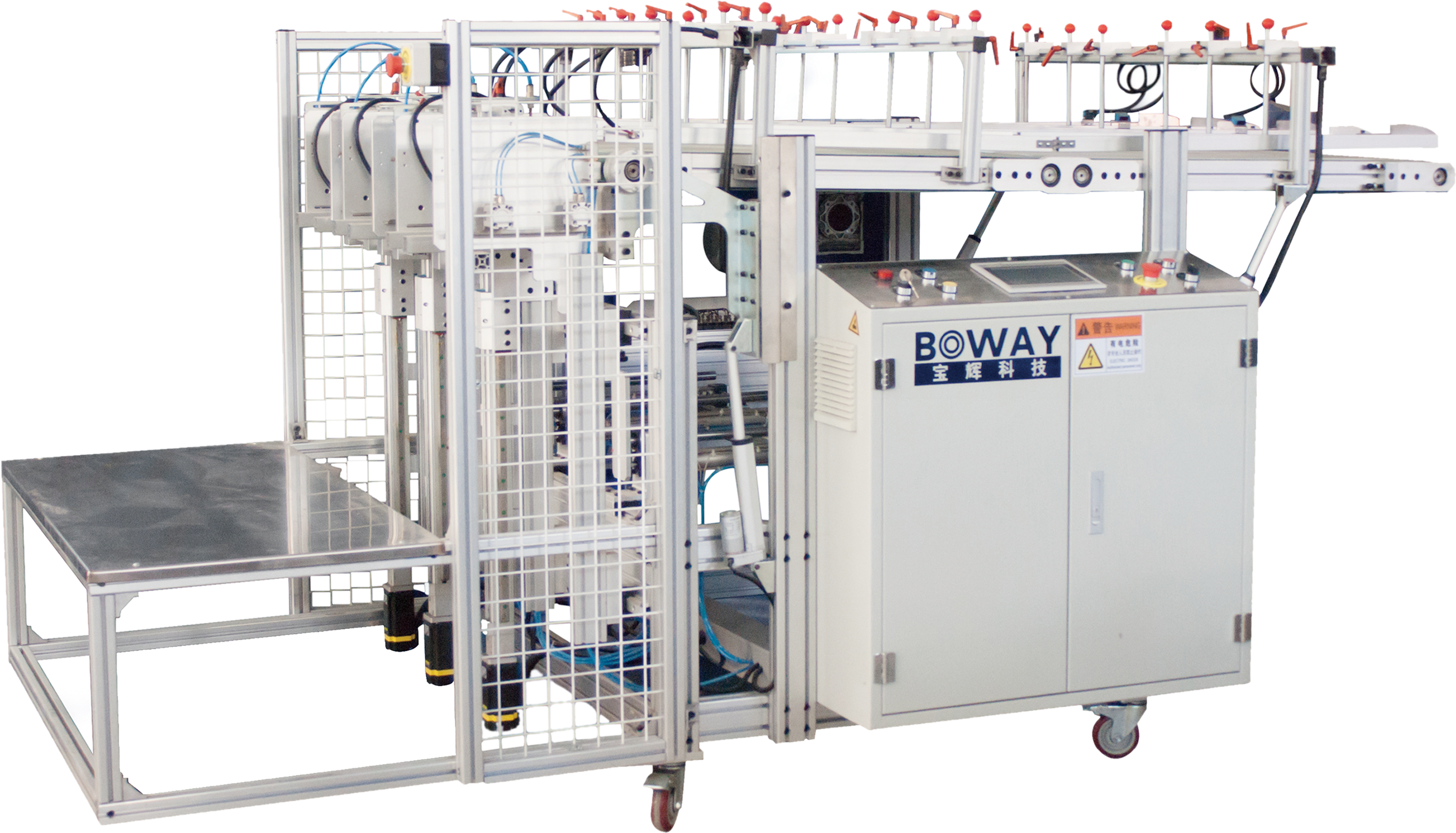
A fully integrated automatic with stacker feeding machine aluminum setup transforms your production floor. However, each automated module must synchronize perfectly. Bottlenecks in the feeding or stacking phase negate the speed of the main press.
Check for dual-shaft unwinders during your physical inspection. They must feature automatic tension control systems. Proper tension prevents foil snapping at high feed rates. It also stops the aluminum material from stretching. Stretched foil causes severe dimensional defects in the final container walls.
Verify the presence of programmable precision foil lubricators. Lubrication requires a very delicate balance during forming. Over-lubrication severely compromises food safety standards and leaves greasy residues. Under-lubrication creates immense friction inside the die. This friction quickly destroys expensive forming molds and creates jagged edges.
Your automated stacker must easily keep pace with the main press. Evaluate the ejection mechanisms carefully during live runs. Most modern systems use either vacuum or mechanical ejectors. Ensure they stack containers uniformly on the conveyor. They must never crush or dent the delicate fluted edges during collection.
Any forming machine is only as good as its tooling. Verify the specific alloy used for the cutting ring. Check the materials of the main forming cavities. High-carbon, high-chrome steel represents the global industry standard. These premium alloys drastically extend your expected mold life. Cheap steel wears down quickly and causes unacceptable container defects.
Aluminum forming relies heavily on consistent pneumatic pressure. Audit the primary air reservoir size located on the machine. Inspect the pressure regulation valves thoroughly. You need absolute stability during peak operational hours. Even minor pressure fluctuations cause incomplete container stamping.
Safety features protect your operators and your entire business. Verify the inclusion of modern safety interlocks before acceptance.
Require your manufacturer to perform a continuous run-at-rate test. The machine should run uninterrupted for four to eight hours. You must supply the exact micron-thickness foil you intend to use daily. Simulating real-world conditions exposes hidden mechanical flaws. Never accept brief, ten-minute demonstration runs as proof of reliability.
Conduct a rigorous dimensional accuracy audit during the FAT. Measure the wall thickness of random product samples. Check the rim curl consistency across multiple production batches. Verify the base flatness against accepted ISO or industry standards. Every container must sit perfectly flat on a level surface.
Intentionally trigger sensor faults during the test run. Force a simulated foil break near the unwinder. Create an artificial stacker jam on the conveyor belt. You must verify the PLC's error handling protocols. The machine should execute automatic shut-off sequences instantly. This protects the tooling from catastrophic collision damage.
Choosing a reliable aluminum foil container making machine supplier dictates your long-term success. Technical specifications mean nothing without robust supplier infrastructure to support them.
Determine if the supplier actually machines their own core components. Some companies merely assemble outsourced parts in a warehouse facility. In-house machining usually indicates superior internal quality control. It also ensures they understand the mechanical tolerances deeply. Ask for a tour of their machining centers via video call.
Clarify all installation responsibilities before paying a deposit. Define who bears the cost for on-site commissioning. Negotiate comprehensive operator training for your factory staff. Initial calibration requires expert oversight to ensure baseline precision. Do not rely on basic instruction manuals for setup.
Look well past standard one-year marketing warranties. Request a detailed list of critical wear parts. Ask for guaranteed lead times on replacement blades, ejector pins, and belts. Clarify their exact terms for remote technical support. Fast engineering support keeps your production lines moving during emergencies.
Purchasing the right aluminum foil container making machine requires serious technical diligence. You must move past slick marketing jargon. Interrogate the technical specs and automation reliability firsthand. Validate the mold precision before making financial commitments. Narrow down your choices systematically based on hard data.
Shortlist manufacturers who welcome rigorous FAT protocols openly. Favor those using standardized PLC components like Siemens. Demand transparent tooling lifespans to ensure consistent daily yields. Verify their after-sales support infrastructure thoroughly.
Your next step is clear. Draft a standardized Request for Quotation (RFQ) immediately. Explicitly list your required tonnage and desired automation level. Detail your FAT expectations and target scrap rates in this document. This proactive approach guarantees you acquire a highly profitable industrial asset.
A: Tonnage requirements depend heavily on the total cutting perimeter and your specific foil gauge. A standard four-cavity setup typically requires a press capacity between 63T and 80T. This ensures enough force to cut and form multiple containers simultaneously without straining the mechanical frame. Always consult your mold designer to calculate the exact force needed for your specific tray dimensions.
A: High scrap rates usually stem from three primary mechanical failures. Inconsistent unwinder tension causes the foil to stretch or wrinkle before entering the press. Improper lubrication creates tearing during the deep-draw forming process. Finally, severe press vibration leads to mold misalignment. You must stabilize these three factors to maintain high production yields and minimize costly material waste.
A: Yes, a single machine can produce both types, but it requires careful configuration. Airline containers feature smooth walls. They demand specialized, wrinkle-free molds and highly precise presses. Standard takeaway boxes use wrinkled walls and are much easier to form. You will need to change the tooling entirely and adjust the pneumatic settings when switching between these two distinct container styles.
A: A comprehensive warranty must cover all major structural components. It should guarantee the main frame integrity and protect against PLC or servo motor defects. You should also demand a specific stroke-life guarantee for the molds before major maintenance is required. Keep in mind that standard wear parts, like cutting blades and conveyor belts, are typically excluded from these warranties.