
Views: 0 Author: Site Editor Publish Time: 2025-09-01 Origin: Site
In today's competitive manufacturing landscape, efficiency isn't just a goal—it's a necessity for survival. Rewinding machines have emerged as critical tools for optimizing production processes across numerous industries, from packaging to printing and beyond. These specialized pieces of equipment can transform production lines, dramatically improving throughput while reducing waste and operational costs. This comprehensive guide explores how rewinding machines deliver measurable efficiency improvements and why they've become indispensable in modern manufacturing operations.
Rewinding machines improve efficiency by automating the process of unwinding, processing, and rewinding materials like aluminum foil, plastic film, and paper. They replace manual handling with precision-controlled operations, reducing labor costs by 40-60% while increasing production speeds by 30-50% compared to manual processes. Advanced models feature automatic tension control, reducing material waste to less than 1% and ensuring consistent product quality.
The efficiency gains from implementing rewinding machines extend far beyond simple speed increases. A recent industry study revealed that manufacturers who invested in advanced rewinding technology reported an average 37% increase in overall productivity within the first year of implementation. These impressive numbers explain why the global market for rewinding machines is projected to grow at a CAGR of 5.8% through 2027, according to recent market research.
Understanding how rewinding machines drive efficiency improvements requires examining their fundamental operational mechanisms:
Automation and Reduced Manual Intervention
Automation represents perhaps the most significant efficiency advantage of rewinding machines. By removing manual handling requirements, these machines deliver multiple benefits:
Labor reduction of 40-60% for rewinding operations
Elimination of human-induced inconsistencies and errors
Continuous operation capability (24/7 if required)
Reallocation of workforce to higher-value activities
Improved workplace safety through reduced manual handling
The fully automatic tension control systems found in modern rewinding machines, like those manufactured by BOWAY, automatically adjust tension parameters based on material properties and roll diameter changes. This automation reduces the need for operator intervention while maintaining optimal processing conditions throughout the entire production run.
Precision Control and Quality Improvements
Advanced rewinding machines achieve exceptional precision that simply isn't possible with manual processes:
Slitting accuracy of ±0.1mm (compared to ±0.5-1mm with manual methods)
Consistent tension control throughout the entire roll
Uniform winding density from core to outer layers
Perfect edge alignment and tracking
Consistent roll hardness from start to finish
This precision directly translates to efficiency gains by:
Reducing reject rates by 50-80%
Eliminating rework requirements
Improving downstream processing efficiency
Enhancing customer satisfaction through consistent product quality
Reducing quality inspection needs
Material Optimization and Waste Reduction
Efficiency isn't just about speed—it's also about material utilization. Rewinding machines excel at optimizing material usage:
Reducing edge trim waste through precise slitting
Minimizing material loss during roll changes and splices
Salvaging usable material from partial or damaged rolls
Optimizing core usage through programmable roll lengths
Preventing material damage through controlled handling
Modern aluminum foil rewinding machines can reduce material waste to less than 1% of total throughput, representing significant cost savings, especially when processing expensive materials like specialty films or foils.
Production Speed Enhancement
Perhaps the most obvious efficiency advantage comes from the sheer speed capabilities of modern rewinding machines:
Processing speeds of 300-800 meters per minute (compared to 50-100 m/min for manual operations)
Quick acceleration and deceleration profiles
Reduced setup and changeover times
Faster roll changes through automated doffing systems
Minimal stoppage requirements
These speed enhancements directly translate to throughput improvements, with many manufacturers reporting production capacity increases of 200-300% after implementing high-speed rewinding machines.
Different types of rewinding machines offer unique efficiency advantages based on the materials they process and their specific design features.
Aluminum foil rewinding machines are specifically engineered to handle the unique challenges of processing thin, delicate foil materials. Their efficiency advantages include:
Specialized tension control systems that prevent foil tearing or stretching
High-precision slitting capabilities for clean edges without burrs
Quick-change slitting systems that reduce changeover times by 60-75%
Advanced edge guiding that maintains alignment within ±0.1mm
Specialized surface treatment options for enhanced downstream processing
BOWAY's high-capacity foil rewinding machines feature fully automatic tension control systems that constantly adjust to maintain optimal tension regardless of roll diameter changes. This results in consistent roll quality while allowing the machine to operate at maximum speed throughout the entire production run.
The efficiency impact is substantial, with aluminum foil processors reporting:
Production speed increases of 30-50%
Material waste reduction of 2.5% to less than 1%
Labor requirements reduced by 40-60%
Quality rejection rates decreased by 65-80%
Plastic film rewinding machines must address unique challenges like static electricity, stretching, and varying material thicknesses. Their efficiency profile includes:
Integrated static elimination systems that prevent material clinging
Specialized tension profiles that accommodate film elasticity
Adjustable winding parameters for different film types
Advanced web guiding systems for consistent tracking
Optional in-line treatments (corona, flame, etc.) for process consolidation
The energy-saving plastic film rewinding machines from BOWAY incorporate these features while also reducing power consumption by up to 30% compared to conventional models, adding energy efficiency to their operational advantages.
Plastic film processors who have implemented these advanced rewinding machines report:
Overall equipment effectiveness (OEE) improvements of 25-40%
Scrap reduction of 35-60%
Setup time reductions of 40-70%
Energy cost savings of 20-35% per unit produced
Baking paper rewinding machines require specific features to handle the unique properties of siliconized papers and similar materials. Their efficiency characteristics include:
Food-grade components for regulatory compliance
Dust control systems for clean processing environments
Specialized slitting solutions for silicon-treated papers
Integrated sheet-cutting options for dual output capabilities
Programmable length control for exact sheet dimensions
The baking paper rewinding machines and roll/baking paper rewinding and cutting machines from BOWAY deliver these features while maintaining exceptional cleanliness standards, making them ideal for food-contact material processing.
Companies utilizing these specialized machines have achieved:
Production capacity increases of 30-45%
Changeover time reductions of 50-65%
Material utilization improvements of 5-8%
Labor cost reductions of 35-55% per unit produced
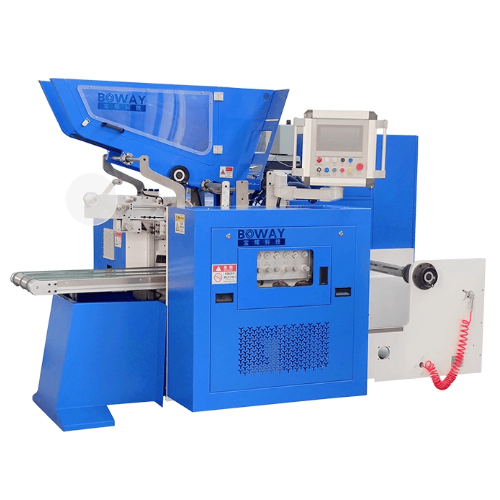
Rewinding machine technology continues to evolve, with several innovations delivering substantial efficiency improvements beyond the basic mechanisms.
Modern rewinding machines leverage advanced digital controls to maximize efficiency:
Touchscreen interfaces for intuitive operation and reduced training needs
Recipe storage for quick parameter recall and consistent setup
Automatic parameter optimization based on material properties
Real-time production monitoring and performance analytics
Remote diagnostics and troubleshooting capabilities
These digital systems reduce operator errors by 70-90% while cutting setup times by 40-60% compared to analog control systems. BOWAY's rewinding machines feature state-of-the-art control systems with multiple language support and intuitive graphical interfaces, minimizing the learning curve for operators.
Advanced tension control represents one of the most significant efficiency advancements in rewinding technology:
Closed-loop feedback systems for real-time tension monitoring
Multi-zone tension control for optimal material handling
Automatic tension profiling based on material characteristics
Taper tension capabilities for improved roll structure
Sensor fusion technology for enhanced accuracy
These intelligent tension systems prevent material breaks (reducing downtime by 40-60%) while ensuring consistent roll quality throughout the entire production run. The fully automatic tension control systems found in BOWAY's machines automatically adjust based on roll diameter changes, maintaining optimal tension without operator intervention.
Vision inspection systems integrated into rewinding machines deliver efficiency through quality assurance:
100% surface inspection during normal production speeds
Automatic defect detection and classification
Real-time quality data collection and analysis
Defect mapping for downstream processing
Reduced need for separate inspection operations
Manufacturers who have implemented integrated vision systems report quality-related efficiency improvements of 30-50% through early defect detection and reduced end-of-line rejections.
The latest rewinding machines feature Industry 4.0 capabilities that further enhance efficiency:
IoT connectivity for production monitoring and analysis
Integration with Manufacturing Execution Systems (MES)
Predictive maintenance algorithms to prevent unplanned downtime
OEE monitoring and improvement tools
Remote operation capabilities
BOWAY offers optional IoT remote monitoring modules for their rewinding machines, allowing manufacturers to monitor performance, receive maintenance alerts, and analyze production data from anywhere in the world. This connectivity has been shown to reduce unplanned downtime by 25-45% while improving overall equipment effectiveness by 15-25%.
The theoretical efficiency advantages of rewinding machines are compelling, but real-world applications demonstrate their practical impact across different industries.
A leading flexible packaging manufacturer implemented BOWAY's high-speed aluminum foil rewinding machine with the following results:
| Performance Metric | Before Implementation | After Implementation | Improvement |
|---|---|---|---|
| Production Speed | 200 m/min | 650 m/min | +225% |
| Material Waste | 2.8% | 0.9% | -68% |
| Labor Requirement | 3 operators per shift | 1 operator per shift | -67% |
| Changeover Time | 45 minutes | 12 minutes | -73% |
| Quality Rejection Rate | 2.5% | 0.7% | -72% |
The manufacturer achieved ROI within 14 months, significantly faster than the projected 24-month payback period, due to the substantial efficiency gains.
A commercial printing operation integrated a specialized plastic film rewinding machine into their production line with impressive results:
Overall equipment effectiveness increased from 62% to 87%
Production capacity expanded by 40% without additional facility space
Setup waste reduced by 65% through digital control systems
Labor productivity improved by 150% (measured in square meters processed per labor hour)
These improvements allowed the printer to accept rush orders they previously would have declined, creating a new revenue stream while improving customer satisfaction.
A manufacturer of specialized baking papers implemented a BOWAY baking paper rewinding machine, achieving:
42% increase in production output
58% reduction in material waste
70% decrease in quality-related customer complaints
35% energy savings per unit produced
The efficiency improvements enabled the manufacturer to reduce lead times from 14 days to just 5 days, providing a significant competitive advantage in their market.
Achieving maximum efficiency with rewinding machines requires more than just purchasing the equipment—it demands a strategic approach to implementation and operation.
Selecting the right rewinding machine is crucial for optimizing efficiency:
Match machine capabilities to actual production requirements
Consider future growth needs (20-30% capacity buffer recommended)
Evaluate automation features versus labor costs
Assess changeover requirements for your product mix
Consider maintenance requirements and spare parts availability
Evaluate integration capabilities with existing systems
BOWAY offers customized rewinding solutions with modular designs that support future upgrades, ensuring that manufacturers can adapt as their needs evolve without complete equipment replacement.
Maximizing operational efficiency requires attention to several key factors:
Develop comprehensive operator training programs
Create standardized setup procedures for different products
Implement preventive maintenance schedules
Optimize production scheduling to minimize changeovers
Monitor and analyze performance data for continuous improvement
Consider shift patterns that maximize equipment utilization
Manufacturers who implement these operational best practices typically achieve 15-25% additional efficiency improvements beyond the base capabilities of the rewinding machine itself.
Proper maintenance significantly impacts rewinding machine efficiency:
Follow manufacturer-recommended maintenance schedules
Implement condition-based monitoring for critical components
Stock essential spare parts to minimize downtime
Provide technical training for maintenance personnel
Document all maintenance activities and outcomes
Analyze failure patterns to prevent recurring issues
BOWAY provides comprehensive maintenance documentation and training with all their rewinding machines, helping customers maximize uptime and equipment lifespan.
The efficiency improvements delivered by rewinding machines translate directly to financial benefits that justify the investment.
Advanced rewinding machines generate direct cost savings through:
Labor cost reduction (typically 40-60%)
Material waste reduction (1-3% of material costs)
Energy consumption reduction (15-30% per unit)
Quality-related cost reductions (50-80% fewer rejects)
Maintenance cost optimization through predictive approaches
For a medium-sized manufacturer processing 1,000 tons of material annually, these savings can amount to $150,000-$300,000 per year depending on material costs and previous operational efficiency.
The quality improvements delivered by precision rewinding generate additional value:
Reduced customer returns and claims (60-80% reduction typical)
Premium pricing opportunities for higher-quality products
Reduced quality inspection costs
Enhanced brand reputation and customer loyalty
New market opportunities requiring higher precision
These quality-related benefits often match or exceed the direct cost savings, particularly for manufacturers serving premium markets or highly regulated industries.
Increased production capacity creates strategic options:
Growth without facility expansion
Reduced lead times for improved customer service
Ability to accept rush orders at premium prices
Reduction in outsourced processing costs
Greater flexibility in production scheduling
Many manufacturers report that the ability to respond quickly to customer demands represents the most significant competitive advantage gained from their rewinding machine investments.
The comprehensive efficiency improvements delivered by advanced rewinding machines typically result in:
ROI periods of 12-24 months for most implementations
Net Present Value (NPV) 3-5 times the initial investment over a 10-year period
Internal Rate of Return (IRR) of 40-60% for typical installations
Payback periods shortened by 30-50% compared to initial projections due to secondary benefits
BOWAY's customizable rewinding machines can be configured to optimize ROI based on each manufacturer's specific production requirements and efficiency objectives.
A1: Rewinding machines improve efficiency through automation, precision control, higher processing speeds, and reduced material waste. They typically increase production capacity by 30-50% while reducing labor costs by 40-60% and material waste by up to 70%.
A2: Modern rewinding machines efficiently process a wide range of materials including aluminum foil, plastic films, paper, laminates, nonwovens, and specialty materials. Each material type benefits from specific machine features designed for optimal processing efficiency.
A3: Digital controls improve efficiency by enabling recipe storage for quick setups, providing real-time performance monitoring, facilitating remote diagnostics, optimizing parameters automatically, and reducing operator errors by up to 90% compared to manual systems.
A4: Efficiency-maximizing maintenance includes following manufacturer schedules, implementing condition monitoring, stocking critical spares, providing technical training, and analyzing failure patterns to prevent recurring issues that impact production efficiency.
A5: Most manufacturers achieve ROI within 12-24 months, with many reporting faster payback periods of 8-14 months due to efficiency gains exceeding initial projections, particularly in material savings and production capacity increases.
A6: Rewinding machines reduce waste through precise tension control preventing breaks, accurate slitting minimizing edge trim, optimized core usage, efficient splice management, and quality monitoring preventing extended production of defective material.
A7: Focus on automatic tension control systems, quick-change slitting capabilities, digital controls with recipe storage, efficient roll change mechanisms, and integration potential with your existing systems to maximize operational efficiency.
The efficiency improvements delivered by advanced rewinding machines extend far beyond simple cost reduction—they create significant competitive advantages in today's challenging manufacturing environment. By implementing the right rewinding technology, manufacturers can simultaneously increase production capacity, improve product quality, reduce operational costs, and enhance responsiveness to customer demands.
BOWAY's comprehensive range of rewinding machines—from specialized aluminum foil rewinding machines to versatile plastic film rewinding equipment and specialized baking paper processing systems—offers solutions tailored to specific efficiency objectives. With their 20 years of industry experience and installations in more than 50 countries, BOWAY has demonstrated the ability to deliver measurable efficiency improvements across diverse manufacturing operations.
The transformation from traditional processing to advanced rewinding technology represents more than an equipment upgrade—it's a strategic investment in manufacturing excellence. As production demands continue to evolve and market pressures intensify, the efficiency advantages provided by modern rewinding machines will become increasingly critical to manufacturing success.
Manufacturers who embrace these technologies now position themselves not just for immediate efficiency gains but for long-term competitive advantage in an increasingly demanding global marketplace. The question is no longer whether you can afford to invest in advanced rewinding technology, but whether you can afford not to.


